5th grade (Eureka Math Squared-aligned)
This course contains Khan Academy practice problems crafted to support the Eureka Math Squared (EM2) curriculum. Designed to make it easier for districts, teachers, and students to find and use practice problems that complement EM2 lessons, this course was not produced in official partnership with Eureka Math Squared.
6 units156 videos11 hours
Learn it live with a class on Puzzicle · Teachers: use it with your class
Unit 1: Place value concepts for multiplication and division with whole numbers
Relate adjacent place value units by using place value understanding
Multiply and divide by 10, 100, and 1,000 and identify patterns in the products and quotients
Use exponents to multiply and divide by powers of 10
Convert measurements and describe relationships between metric units
Solve multi-step word problems by using metric measurement conversion.
Multiply by using familiar methods
Multiply two- and three-digit numbers by two-digit numbers by using the distributive property
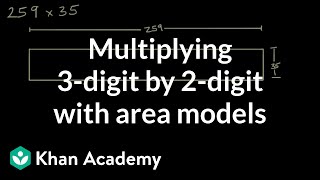
Multiply two- and three-digit numbers by two-digit numbers by using the standard algorithm
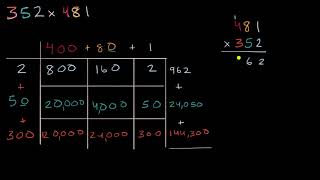
Multiply two multi-digit numbers by using the standard algorithm
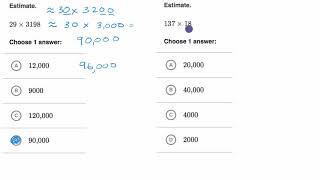
Divide two- and three-digit numbers by multiples of 10
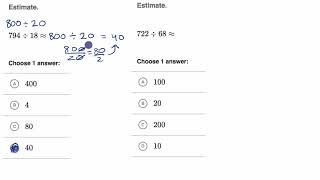
Divide three-digit numbers by two-digit numbers in problems that result in two-digit quotients
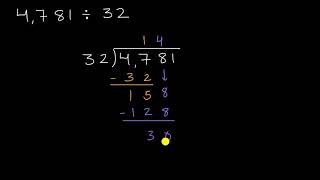
Divide four-digit numbers by two-digit numbers
Write, interpret, and compare numerical expressions
Solve multi-step word problems involving the four operations
Unit 2: Addition and subtraction with fractions
Interpret a fraction as division
Interpret a fraction as division by writing remainders as fractions
Add and subtract fractions with related units by using pictorial models
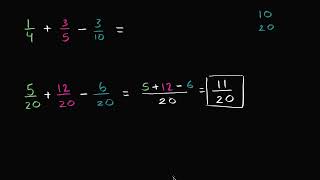
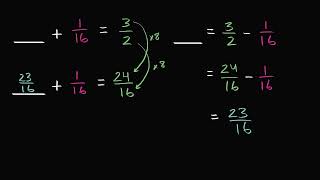
Add and subtract fractions with unrelated units by finding equivalent fractions numerically
Add whole numbers and mixed numbers and add mixed numbers with related units
Add mixed numbers with unrelated units
Subtract whole numbers from mixed numbers and mixed numbers from whole numbers
Subtract mixed numbers from mixed numbers with related units
Subtract mixed numbers from mixed numbers with unrelated units
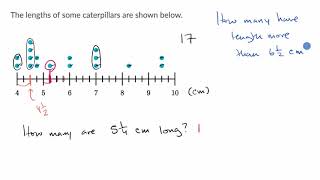
Solve problems by using data from a line plot
Solve problems by equally redistributing a total amount
Unit 3: Multiplication and division with fractions
Interpret fractions as division to find fractions of a set with tape diagrams and number lines
Multiply a whole number by a fraction
Convert smaller customary measurement units to larger measurement units
Multiply fractions less than 1 by unit fractions pictorially
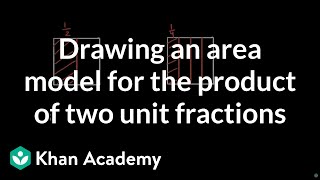
Multiply fractions less than 1 pictorially
Multiply fractions
Divide a nonzero whole number by a unit fraction to find the number of groups
Divide a nonzero whole number by a unit fraction to find the size of the group
Divide a unit fraction by a nonzero whole number
Divide by whole numbers and unit fractions
Solve word problems involving fractions with multiplication and division
Compare and evaluate expressions with parentheses
Solve multi-step word problems involving fractions and write equations with parentheses
Solve multi-step word problems involving fractions
Unit 4: Place value concepts for decimal operations
Represent thousandths as a place value unit
Represent decimal numbers to the thousandths place in different forms
Relate the values of digits in a decimal number by using place value understanding
Multiply and divide decimal numbers by powers of 10
Compare decimal numbers to the thousandths place
Round decimal numbers to any place value unit
Add decimal numbers by using place value understanding
Subtract decimal numbers by using place value understanding
Solve word problems involving addition and subtraction of decimal numbers and fractions
Multiply decimal numbers to hundredths by one-digit whole numbers and multiples of 10, 100, or 1,000 by using different written methods
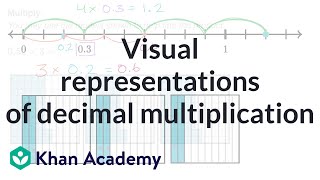
Multiply decimal numbers to hundredths by two-digit whole numbers by using different methods
Relate decimal-number multiplication to fraction multiplication
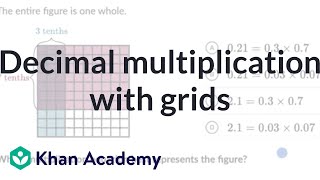
Multiply a decimal number by a decimal number
Divide decimal numbers to hundredths by one-digit whole numbers and multiples of 10, 100, or 1,000 by using unit form and place value understanding
Divide decimal numbers to hundredths by one-digit whole numbers and multiples of 10, 100, or 1,000 by using place value understanding and vertical form
Divide decimal numbers by decimal numbers, resulting in decimal-number quotients
Additional practice
 Decimals in written form (hundredths) ✓ Check-ins3:31
 Comparing decimals in different representations ✓ Check-ins4:28
 Comparing decimals: 156.378 and 156.348 ✓ Check-ins2:08
 Dividing a decimal by a whole number on the number line ✓ Check-ins1:29
 Understanding decimal multiplication ✓ Check-ins3:58
 Reasoning through multiplying decimal word problems ✓ Check-ins4:36
Unit 5: Addition and multiplication with area and volume
Analyze hierarchies and identify properties of quadrilaterals
Classify parallelograms based on their properties
Classify rectangles and rhombuses based on their properties
Classify kites and squares based on their properties
Classify quadrilaterals in a hierarchy based on properties
Find the area of a rectangle with fraction side lengths by relating the rectangle to a unit square
Find areas of rectangles with fraction side lengths by using multiplication
Multiply mixed numbers
Solve multi-step word problems involving multiplication of mixed numbers
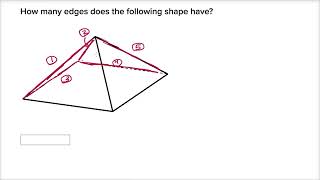
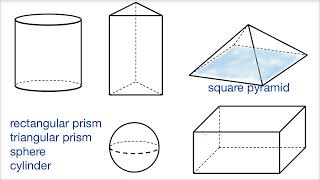
Identify attributes and properties of right rectangular prisms
Find the volume of right rectangular prisms by packing with unit cubes and counting
Compose and decompose right rectangular prisms to find their volume by using layers
Find the volumes of right rectangular prisms by using the area of the base
Find the volumes of right rectangular prisms by multiplying the edge lengths
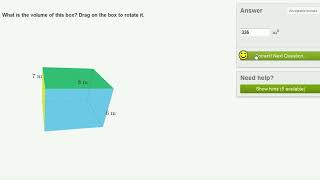
Solve word problems involving volumes of right rectangular prisms
Find the volumes of solid figures composed of right rectangular prisms
Unit 6: Foundations to geometry in the coordinate plane
Construct a coordinate system in a plane
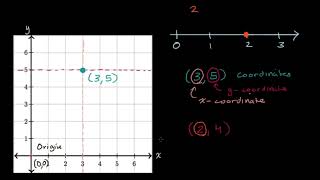
Identify and plot points by using ordered pairs
Describe the distance and direction between points in the coordinate plane
Generate number patterns to form ordered pairs
Identify addition and subtraction relationships between corresponding terms in number patterns
Identify multiplication and division relationships between corresponding terms in number patterns
Interpret graphs that represent real-world situations
Learn this with a class
With a class on Puzzicle this course runs as a timetable of live study parties: your batch watches together and answers the check-ins, sometimes with a teacher leading.
Course content © Khan Academy, used under CC BY-NC-SA. See this course on Khan Academy.