8th grade math (IM® v.360 aligned)
This course contains Khan Academy practice problems crafted to support the IM® v.360 curriculum by Illustrative Mathematics® (IM), licensed under Creative Commons/Attribution/Non-commercial 4.0. Designed to make it easier for districts, teachers, and students to find and use practice problems that complement IM v.360 lessons, this course was not produced in official partnership with Illustrative Mathematics.
8 units198 videos14 hours
Learn it live with a class on Puzzicle · Teachers: use it with your class
Unit 1: Rigid transformations and congruence
Naming the moves
Grid moves
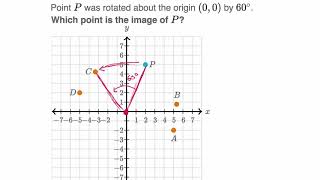
Coordinate moves
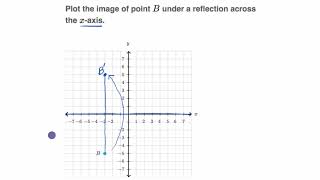
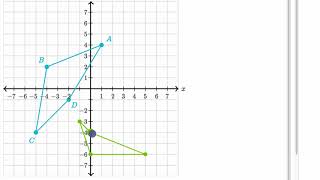
Describing transformations
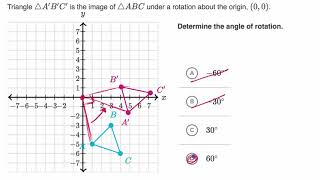
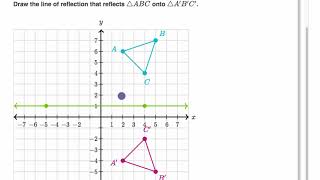
No bending or stretching

Moves in parallel
Composing figures
Congruent polygons
Alternate interior angles
Parallel lines and the angles in a triangle
Unit 2: Dilations, similarity, and introducing slope
Projecting and scaling
Circular grid
Dilations with no grid
Dilations on a square grid
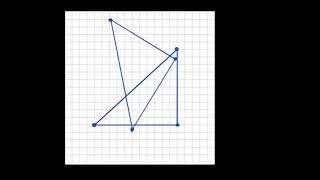
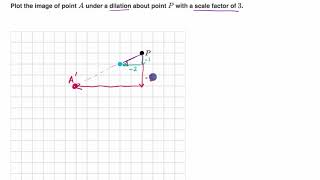

More dilations
Similar polygons
Similar triangles
Side lengths quotients in similar triangles
Unit 3: Linear relationships
Understanding proportional relationships
Graphs of proportional relationships
Representing proportional relationships
Comparing proportional relationships
Introduction to linear relationships
Representations of linear relationships
Translating to y=mx+b
Slopes don't have to be positive
Line Designs (optional)
Equations of all kinds of lines
Solutions to linear equations
More solutions to linear equations
Unit 4: Linear equations and linear systems
Writing equivalent equations
Keeping the equation balanced
Balanced moves
More balanced moves
Strategic solving
All, some, or no solutions
How many solutions?
When are they the same?
Systems of equations
Solving systems of equations
Solving more systems
Solving problems with systems of equations
Unit 5: Functions and volume
Inputs and Outputs
Introduction to functions
 What is a function? ✓ Check-ins7:57
 Testing if a relationship is a function ✓ Check-ins2:23
 Relations and functions ✓ Check-ins6:57
 Checking if a table represents a function ✓ Check-ins1:16
 Recognizing functions from table ✓ Check-ins4:40
 Recognizing functions from verbal description ✓ Check-ins1:31
 Recognizing functions from verbal description word problems ✓ Check-ins3:23
Equations for functions
Tables, equations, and graphs of functions
More graphs of functions
Even more graphs of functions
Connecting representations of functions
Linear functions
Piecewise linear functions
Filling containers
The volume of a cylinder
Finding cylinder dimensions
The volume of a cone
Finding cone dimensions
Scaling one dimension
Estimating a hemisphere
The volume of a sphere
Additional practice (optional)
Unit 6: Associations in data
Plotting data
What a point in a scatter plot means
Fitting a line to data
The slope of a fitted line
Observing more patterns in scatter plots
Looking for associations
Using data displays to find associations
Unit 7: Exponents and scientific notation
Exponent review
Negative exponents with powers of 10
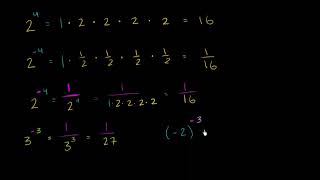
What about other bases?
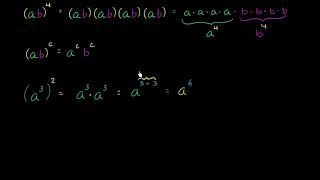
Practice with rational bases
Combining bases
Describing large and small numbers using powers of 10
Representing small numbers on the number line
Applications of arithmetic with powers of 10
Definition of scientific notation
Estimating with scientific notation
Adding and subtracting with scientific notation
Unit 8: Pythagorean theorem and irrational numbers
The areas of squares
Side lengths and areas
Rational and irrational numbers
Square roots on the number line
Reasoning about square roots
Finding side lengths of triangles
Finding unknown side lengths
Applications of the Pythagorean Theorem
More applications of the Pythagorean Theorem
Finding distances in the coordinate plane
Edge lengths and volumes
Decimal representations of rational numbers
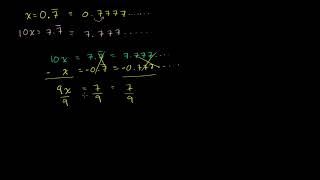
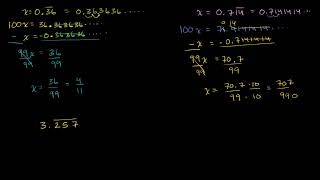
Infinite decimal expansions
When is the same size not the same size?
Learn this with a class
With a class on Puzzicle this course runs as a timetable of live study parties: your batch watches together and answers the check-ins, sometimes with a teacher leading.
Course content © Khan Academy, used under CC BY-NC-SA. See this course on Khan Academy.