8th grade (Eureka Math Squared-aligned)
This course contains Khan Academy practice problems crafted to support the Eureka Math Squared (EM2) curriculum. Designed to make it easier for districts, teachers, and students to find and use practice problems that complement EM2 lessons, this course was not produced in official partnership with Eureka Math Squared.
6 units201 videos16 hours
Learn it live with a class on Puzzicle · Teachers: use it with your class
Unit 1: Scientific notation, exponents, and irrational numbers
Comparing large numbers
More properties of exponents

Making sense of the exponent of 0

Making sense of integer exponents

Writing equivalent expressions
Evaluating numerical expressions by using properties of exponents (optional)

Small positive numbers in scientific notation
Operations with numbers in scientific notation

Applications with numbers in scientific notation




Approximating values of roots and π^2
Familiar and not so familiar numbers
Ordering irrational numbers

Unit 2: Rigid motions and congruent figures
Motions of the plane

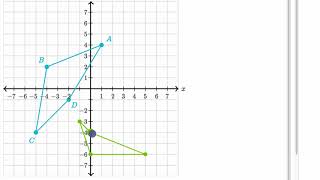
Translations and reflections on the coordinate plane


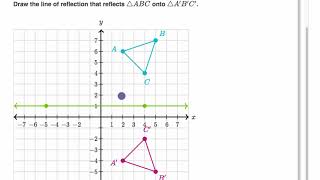
Rotations on the coordinate plane
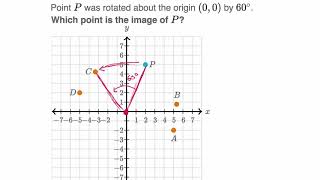
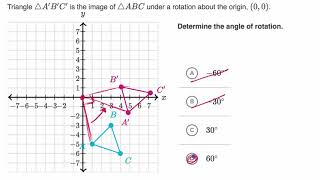
Working backward
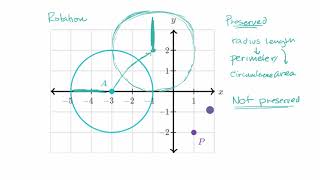
Ordering sequences of rigid motions

Showing figures are congruent
Lines cut by a transversal
Angle sum of a triangle



Exterior angles of triangles



Find unknown angle measures
Using the Pythagorean theorem and its converse

Distance in the coordinate plane




Unit 3: Dilations and similar figures
Exploring dilations
Reductions and more enlargements
Using lined paper to explore dilations
Dilations on a grid


Dilations on the coordinate plane
Describing dilations
Sequencing transformations
Similar figures

Using similar figures to find unknown side lengths
Similar right triangles
Similar triangles on a line

Unit 4: Linear equations in one and two variables
Equations
 The distributive property with variables ✓ Check-ins6:14
 Factoring with the distributive property ✓ Check-ins3:28
 Same thing to both sides of equations ✓ Check-ins2:32
 Intro to two-step equations ✓ Check-ins5:12
 Two-step equations intuition ✓ Check-ins8:41
 Worked example: two-step equations ✓ Check-ins3:04
Solving linear equations
Solving linear equations with rational coefficients
Using linear equations to solve problems
Linear equations with more than one solution

Another possible number of solutions
Writing linear equations
Solutions to linear equations in two variables
The graph of a linear equation in two variables
Lines with special characteristics
Comparing proportional relationships
Proportional relationships and slope
Slopes of rising lines
Slopes of falling lines

Using coordinates to find slope
Slope-intercept form of the equation of a line
Slope and parallel lines
Point-slope form of the equation of a line


Comparing equations in different forms

The patterns, the pops, and the pastries
Get to work
 Linear graphs word problems ✓ Check-ins5:05
 Linear graphs word problem: cats ✓ Check-ins2:43
 Linear equations word problems: volcano ✓ Check-ins5:58
 Linear equations word problems: earnings ✓ Check-ins4:03
 Modeling with linear equations: snow ✓ Check-ins4:58
 Linear function example: spending money ✓ Check-ins5:22
Unit 5: Systems of linear equations
Introduction to systems of linear equations
 Systems of equations with graphing ✓ Check-ins8:30
 Systems of equations with graphing: y=7/5x-5 & y=3/5x-1 ✓ Check-ins2:22
 Systems of equations with graphing: 5x+3y=7 & 3x-2y=8 ✓ Check-ins6:35
 Systems of equations with graphing: chores ✓ Check-ins5:19
 Systems of equations with graphing: exact & approximate solutions ✓ Check-ins5:56
Identifying solutions
More than one solution
 Systems of equations number of solutions: fruit prices (1 of 2) ✓ Check-ins9:25
 Systems of equations number of solutions: fruit prices (2 of 2) ✓ Check-ins7:08
 Solutions to systems of equations: dependent vs. independent ✓ Check-ins5:10
 Number of solutions to a system of equations ✓ Check-ins3:26
 Number of solutions to a system of equations graphically ✓ Check-ins6:36
 Number of solutions to a system of equations algebraically ✓ Check-ins6:01
 How many solutions does a system of linear equations have if there are at least two? ✓ Check-ins2:12
The substitution method
 Systems of equations with substitution: 2y=x+7 & x=y-4 ✓ Check-ins4:39
 Systems of equations with substitution: y=4x-17.5 & y+2x=6.5 ✓ Check-ins4:06
 Systems of equations with substitution: -3x-4y=-2 & y=2x-5 ✓ Check-ins4:21
 Systems of equations with substitution: y=-5x+8 & 10x+2y=-2 ✓ Check-ins3:44
 Systems of equations with substitution: y=-1/4x+100 & y=-1/4x+120 ✓ Check-ins3:44
Rewriting equations to solve a system of equations
Writing and solving systems of equations for real-world problems
 Age word problem: Imran ✓ Check-ins3:43
 Age word problem: Ben & William ✓ Check-ins6:28
 Age word problem: Arman & Diya ✓ Check-ins5:21
 System of equations word problem: walk & ride ✓ Check-ins7:00
 System of equations word problem: no solution ✓ Check-ins5:03
 System of equations word problem: infinite solutions ✓ Check-ins5:01
 Systems of equations with substitution: coins ✓ Check-ins5:58
Unit 6: Functions and bivariate statistics
Definition of a function
 What is a function? ✓ Check-ins7:57
 Worked example: Evaluating functions from equation ✓ Check-ins0:59
 Function notation example ✓ Check-ins2:13
 Worked example: Evaluating functions from graph ✓ Check-ins0:44
 Equations vs. functions ✓ Check-ins4:18
 Manipulating formulas: temperature ✓ Check-ins2:41
 Obtaining a function from an equation ✓ Check-ins3:04
Linear functions and proportionality
More examples of functions
 Testing if a relationship is a function ✓ Check-ins2:23
 Relations and functions ✓ Check-ins6:57
 Checking if a table represents a function ✓ Check-ins1:16
 Recognizing functions from table ✓ Check-ins4:40
 Checking if an equation represents a function ✓ Check-ins3:33
 Recognizing functions from verbal description ✓ Check-ins1:31
 Recognizing functions from verbal description word problems ✓ Check-ins3:23
Graphs of functions and equations
Interpreting rate of change and initial value
Comparing functions
 Comparing linear functions: equation vs. graph ✓ Check-ins2:23
 Comparing linear functions: same rate of change ✓ Check-ins2:36
 Comparing linear functions: faster rate of change ✓ Check-ins3:40
 Comparing linear functions word problem: climb ✓ Check-ins4:44
 Comparing linear functions word problem: walk ✓ Check-ins3:44
 Comparing linear functions word problem: work ✓ Check-ins3:46
Increasing and decreasing functions
Scatter plots
Patterns in scatter plots

Informally fitting a line to data
Determining an equation of a line fit to data

Linear models
Bivariate categorical data
Association in bivariate categorical data
Analyzing bivariate categorical data
Volumes of prisms and pyramids



Volume of cylinders
Volume of cones
Volume of spheres
Learn this with a class
With a class on Puzzicle this course runs as a timetable of live study parties: your batch watches together and answers the check-ins, sometimes with a teacher leading.
Course content © Khan Academy, used under CC BY-NC-SA. See this course on Khan Academy.