Chemistry archive
Chemistry is the study of matter and the changes it undergoes.
10 units243 videos34 hours
Learn it live with a class on Puzzicle · Teachers: use it with your class
Unit 1: Atoms, compounds, and ions
Introduction to the atom
History of atomic structure


Quantum numbers and orbitals
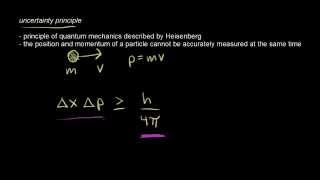
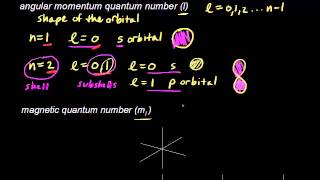
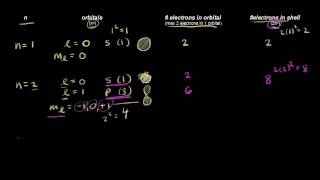
Electron configurations
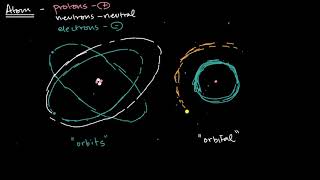 Shells, subshells, and orbitals ✓ Check-ins9:41
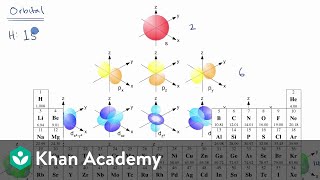 Introduction to electron configurations ✓ Check-ins5:08
 Noble gas configuration ✓ Check-ins6:47
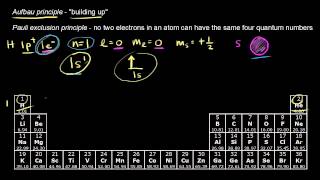 Electron configurations for the first period ✓ Check-ins6:22
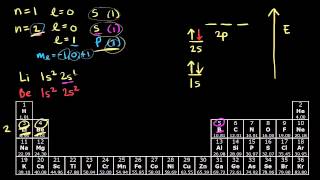 Electron configurations for the second period ✓ Check-ins12:12
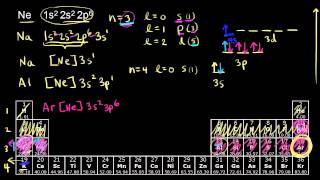 Electron configurations for the third and fourth periods ✓ Check-ins13:08
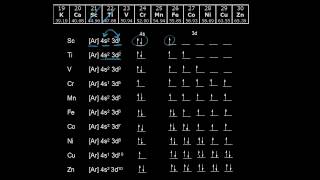 Electron configurations of the 3d transition metals ✓ Check-ins12:33
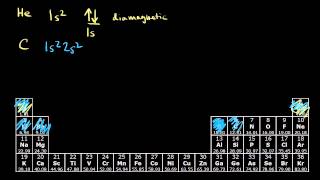 Paramagnetism and diamagnetism ✓ Check-ins8:05
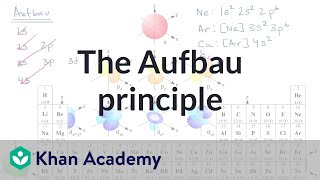 The Aufbau principle ✓ Check-ins7:53
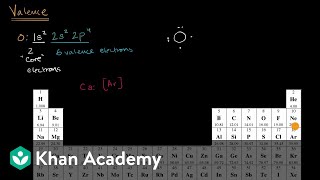 Valence electrons ✓ Check-ins5:11
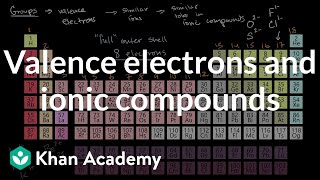 Valence electrons and ionic compounds ✓ Check-ins7:55
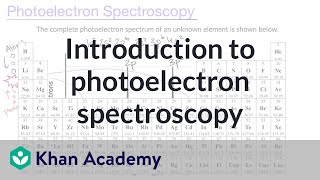 Introduction to photoelectron spectroscopy ✓ Check-ins8:24
Introduction to the periodic table
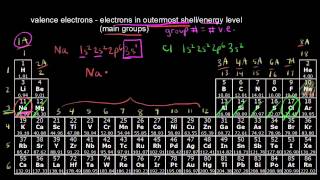
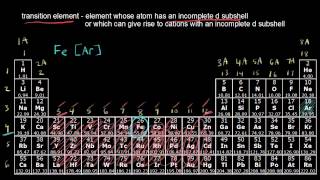
Periodic table trends
 Atomic radius trends on periodic table ✓ Check-ins9:40
 Atomic and ionic radii ✓ Check-ins11:26
 Mini-video on ion size ✓ Check-ins3:04
 Ionization energy trends ✓ Check-ins10:02
 Ionization energy: period trend ✓ Check-ins10:03
 First and second ionization energy ✓ Check-ins7:35
 Electron affinity: period trend ✓ Check-ins13:06
 Electronegativity ✓ Check-ins9:54
 Electronegativity and bonding ✓ Check-ins11:39
 Metallic nature ✓ Check-ins9:28
 Periodic trends and Coulomb's law ✓ Check-ins10:43
 Worked example: Identifying an element from successive ionization energies ✓ Check-ins2:31
 Ionization energy: group trend ✓ Check-ins10:19
Names and formulas of ionic compounds
Unit 2: Chemical bonds
Types of chemical bonds
Bond energy

Solids
Dot structures and molecular geometry
 Drawing dot structures ✓ Check-ins14:42
 Drawing Lewis diagrams ✓ Check-ins7:08
 Worked example: Lewis diagram of formaldehyde (CH₂O) ✓ Check-ins6:08
 Worked example: Lewis diagram of the cyanide ion (CN⁻) ✓ Check-ins4:28
 Worked example: Lewis diagram of xenon difluoride (XeF₂) ✓ Check-ins3:11
 Exceptions to the octet rule ✓ Check-ins7:10
 Resonance ✓ Check-ins7:24
 Resonance and dot structures ✓ Check-ins6:15
 Formal charge ✓ Check-ins7:03
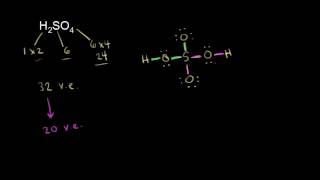 Formal charge and dot structures ✓ Check-ins11:30
 Worked example: Using formal charges to evaluate nonequivalent resonance structures ✓ Check-ins8:02
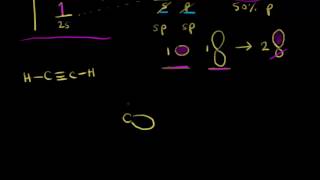
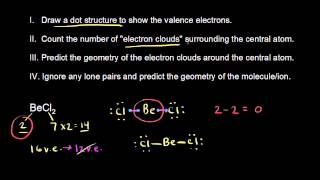 VSEPR for 2 electron clouds ✓ Check-ins8:04
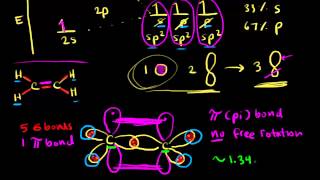
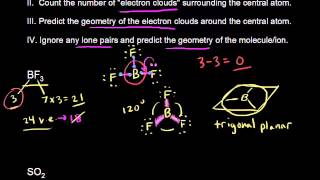 VSEPR for 3 electron clouds ✓ Check-ins12:33
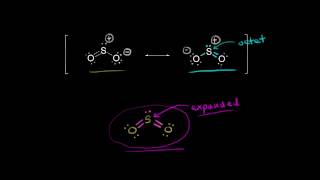 More on the dot structure for sulfur dioxide ✓ Check-ins4:28
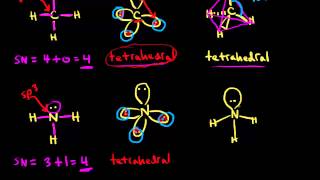
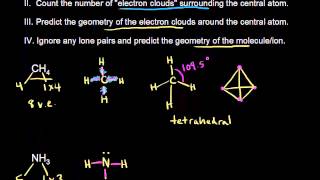 VSEPR for 4 electron clouds ✓ Check-ins10:05
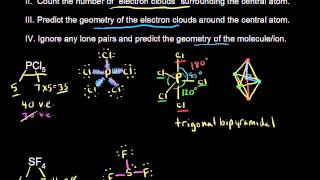 VSEPR for 5 electron clouds (part 1) ✓ Check-ins14:58
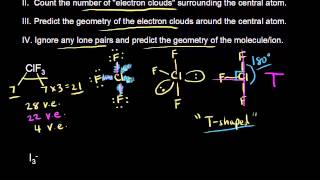 VSEPR for 5 electron clouds (part 2) ✓ Check-ins10:48
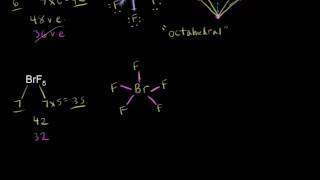 VSEPR for 6 electron clouds ✓ Check-ins12:29
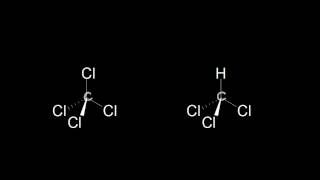 Molecular polarity ✓ Check-ins9:22
 2015 AP Chemistry free response 2d and e ✓ Check-ins6:20
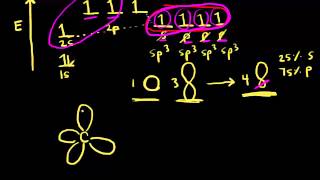
Unit 3: Chemical reactions and stoichiometry
Balancing chemical equations
 Chemical reactions introduction ✓ Check-ins9:13
 Balancing chemical equations ✓ Check-ins5:04
 Balancing more complex chemical equations ✓ Check-ins4:37
 Visually understanding balancing chemical equations ✓ Check-ins4:37
 Balancing another combustion reaction ✓ Check-ins4:58
 Balancing chemical equation with substitution ✓ Check-ins4:12
Stoichiometry
Molecular composition


Unit 4: More about chemical reactions
Representations of reactions
Physical and chemical changes
Unit 5: Gases and kinetic molecular theory
Ideal gas equation
 The ideal gas law (PV = nRT) ✓ Check-ins6:19
 Worked example: Using the ideal gas law to calculate number of moles ✓ Check-ins7:17
 Worked example: Using the ideal gas law to calculate a change in volume ✓ Check-ins6:32
 Gas mixtures and partial pressures ✓ Check-ins6:23
 Worked example: Calculating partial pressures ✓ Check-ins8:03
 Worked example: Vapor pressure and the ideal gas law ✓ Check-ins16:02
Kinetic molecular theory

Unit 6: States of matter and intermolecular forces
States of matter
 States of matter ✓ Check-ins19:24
 States of matter follow-up ✓ Check-ins8:45
 Specific heat and latent heat of fusion and vaporization ✓ Check-ins14:57
 Specific heat, heat of fusion and vaporization example ✓ Check-ins14:49
 Chilling water problem ✓ Check-ins11:23
 Change of state example ✓ Check-ins7:38
 Vapor pressure ✓ Check-ins18:04
 Phase diagrams ✓ Check-ins12:36
 Representing solids, liquids, and gases using particulate models ✓ Check-ins4:51
 Crystalline and amorphous polymers ✓ Check-ins4:42
 Representing alloys using particulate models ✓ Check-ins6:30
Introduction to intermolecular forces
 London dispersion forces ✓ Check-ins9:38
 Dipole–dipole forces ✓ Check-ins6:46
 Hydrogen bonding ✓ Check-ins6:39
 Ion–dipole forces ✓ Check-ins4:40
 Intermolecular forces and vapor pressure ✓ Check-ins6:04
 Solubility and intermolecular forces ✓ Check-ins4:23
 Surface tension ✓ Check-ins4:31
 Capillary action and why we see a meniscus ✓ Check-ins8:26
 Boiling points of organic compounds ✓ Check-ins11:07
 Boiling point comparison: AP Chemistry multiple choice ✓ Check-ins6:19
 Solubility of organic compounds ✓ Check-ins12:21
Mixtures and solutions



Unit 7: Chemical equilibrium

Unit 8: Acids, bases, and solutions
Acids, bases, and pH

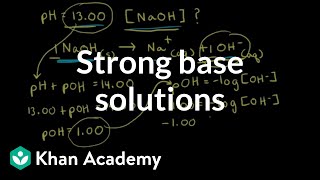
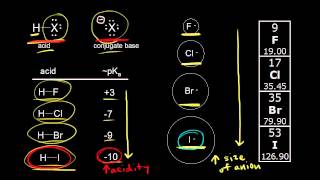
Acid-base equilibria
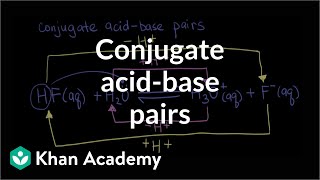
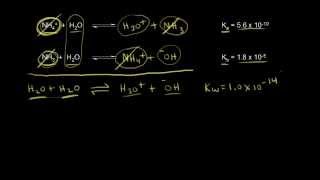
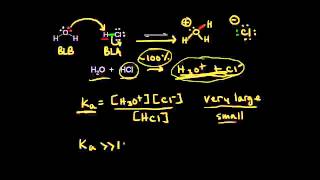
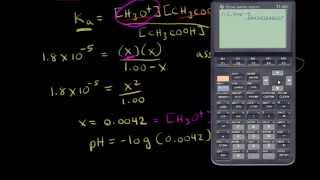
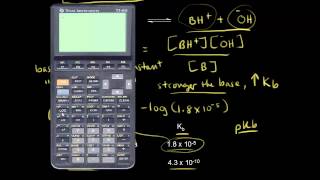
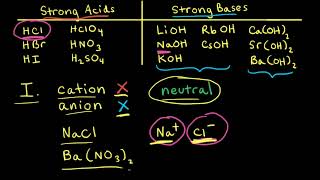
Buffer solutions
 Introduction to buffers ✓ Check-ins6:20
 Properties of buffers ✓ Check-ins6:59
 Henderson–Hasselbalch equation ✓ Check-ins7:34
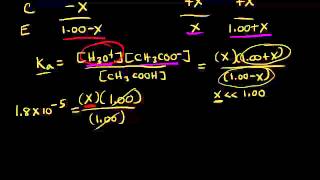 Common ion effect and buffers ✓ Check-ins13:19
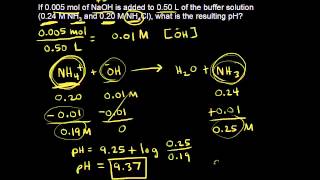 Buffer solution pH calculations ✓ Check-ins11:39
 Methods for preparing buffers ✓ Check-ins10:26
 pH and pKa relationship for buffers ✓ Check-ins7:50
 Buffer capacity ✓ Check-ins10:44
Titrations
 Acid–base titrations ✓ Check-ins8:50
 Worked example: Determining solute concentration by acid–base titration ✓ Check-ins7:50
 Titration of a strong acid with a strong base ✓ Check-ins10:12
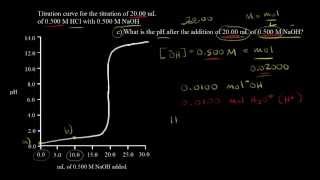 Titration of a strong acid with a strong base (continued) ✓ Check-ins10:17
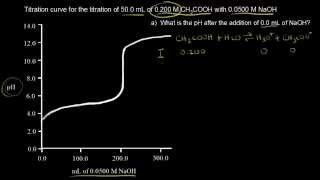 Titration of a weak acid with a strong base ✓ Check-ins14:27
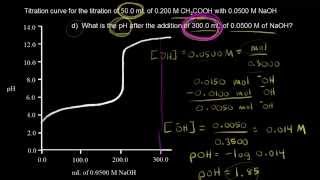 Titration of a weak acid with a strong base (continued) ✓ Check-ins15:13
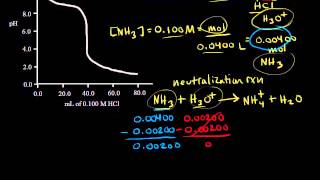 Titration of a weak base with a strong acid ✓ Check-ins14:58
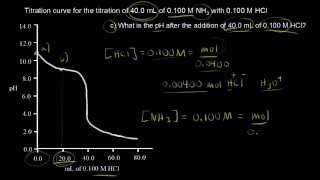 Titration of a weak base with a strong acid (continued) ✓ Check-ins14:48
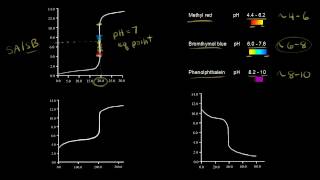 Titration curves and acid-base indicators ✓ Check-ins7:10
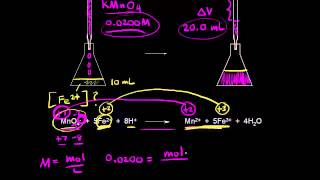 Redox titrations ✓ Check-ins7:58
Solubility equilibria
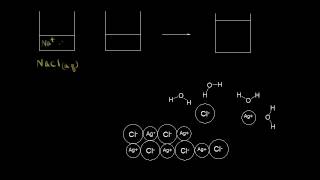 Dissolution and precipitation ✓ Check-ins10:00
 Common polyatomic ions ✓ Check-ins5:48
 Introduction to solubility equilibria ✓ Check-ins8:17
 Worked example: Calculating solubility from Kₛₚ ✓ Check-ins4:52
 2015 AP Chemistry free response 4 ✓ Check-ins9:20
 The common-ion effect ✓ Check-ins10:08
 pH and solubility ✓ Check-ins5:14
 Solubility and complex ion formation ✓ Check-ins14:50
Unit 9: Redox reactions and electrochemistry
Oxidation-reduction reactions
 Oxidation and reduction ✓ Check-ins11:04
 Oxidation state trends in periodic table ✓ Check-ins8:38
 Practice determining oxidation states ✓ Check-ins4:27
 Unusual oxygen oxidation states ✓ Check-ins4:15
 Oxidizing and reducing agents ✓ Check-ins8:30
 Disproportionation ✓ Check-ins5:03
 Worked example: Balancing a simple redox equation ✓ Check-ins7:11
 Worked example: Balancing a redox equation in acidic solution ✓ Check-ins12:04
 Worked example: Balancing a redox equation in basic solution ✓ Check-ins14:02
- Redox titrations ✓ Check-ins7:58
Galvanic cells
 Redox reaction from dissolving zinc in copper sulfate ✓ Check-ins5:01
 Introduction to galvanic/voltaic cells ✓ Check-ins6:00
 Electrodes and voltage of Galvanic cell ✓ Check-ins4:33
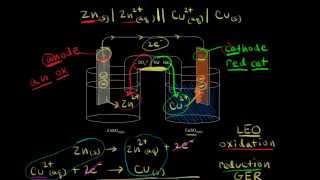 Shorthand notation for galvanic/voltaic cells ✓ Check-ins7:17
 Lead storage battery ✓ Check-ins9:06
 Nickel-cadmium battery ✓ Check-ins11:07
Standard cell potentials
Electrochemistry, thermodynamics, and equilibrium
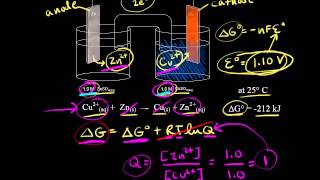
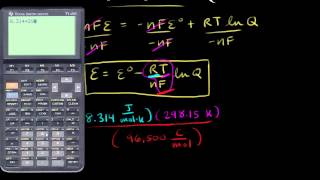
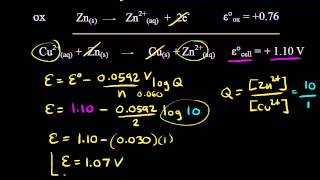
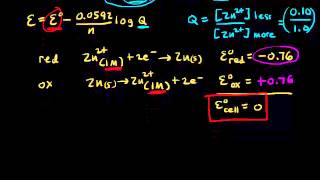
Cell potentials under nonstandard conditions
Electrolytic cells and electrolysis
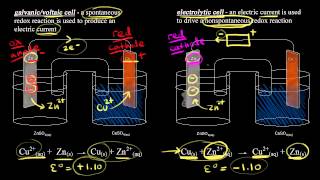
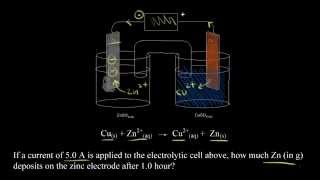
Unit 10: Kinetics
Reaction rates and rate laws
 Introduction to kinetics ✓ Check-ins15:27
 Introduction to reaction rates ✓ Check-ins9:14
 Factors affecting reaction rates ✓ Check-ins5:29
 Rate law and reaction order ✓ Check-ins10:39
 Units of the rate constant ✓ Check-ins5:09
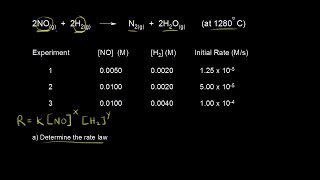 Worked example: Determining a rate law using initial rates data ✓ Check-ins12:28
Relationship between reaction concentrations and time
 First-order reactions ✓ Check-ins7:44
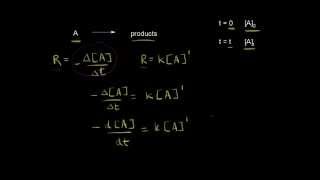 First-order reaction (with calculus) ✓ Check-ins7:14
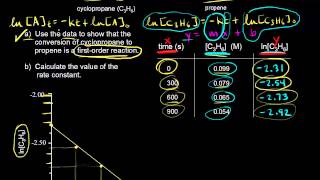 Plotting data for a first-order reaction ✓ Check-ins9:21
 Half-life of a first-order reaction ✓ Check-ins8:16
 Worked example: Using the first-order integrated rate law and half-life equations ✓ Check-ins10:20
 Second-order reactions ✓ Check-ins7:43
 Second-order reaction (with calculus) ✓ Check-ins7:14
 Half-life of a second-order reaction ✓ Check-ins7:09
 Zero-order reactions ✓ Check-ins4:42
 Zero-order reaction (with calculus) ✓ Check-ins9:53
 Kinetics of radioactive decay ✓ Check-ins7:53
Arrhenius equation and reaction mechanisms
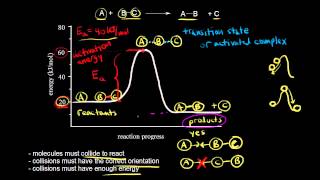 Collision theory ✓ Check-ins8:48
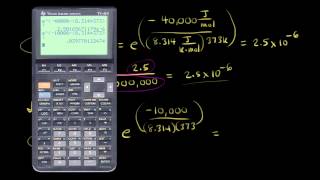 The Arrhenius equation ✓ Check-ins9:24
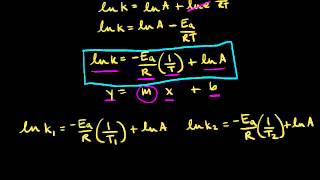 Forms of the Arrhenius equation ✓ Check-ins6:41
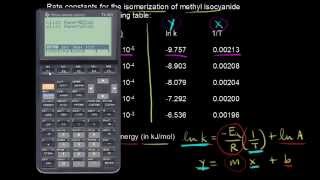 Using the Arrhenius equation ✓ Check-ins11:06
 Collision theory and the Maxwell–Boltzmann distribution ✓ Check-ins7:28
 Elementary reactions ✓ Check-ins5:35
 Reaction mechanism and rate law ✓ Check-ins8:42
 The pre-equilibrium approximation ✓ Check-ins7:23
 Multistep reaction energy profiles ✓ Check-ins7:47
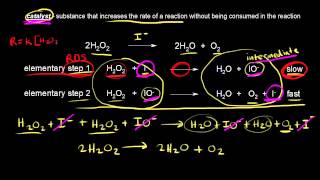 Catalysts ✓ Check-ins7:30
 Types of catalysts ✓ Check-ins4:59
Spectroscopy
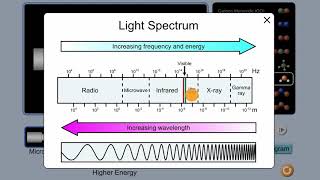 Introduction to spectroscopy ✓ Check-ins4:54
 Electronic transitions and energy ✓ Check-ins7:52
 Worked example: Calculating the maximum wavelength capable of ionization ✓ Check-ins6:20
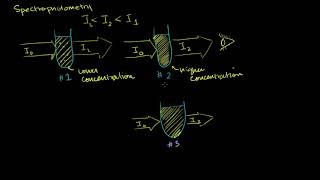 Spectrophotometry and the Beer–Lambert Law ✓ Check-ins10:23
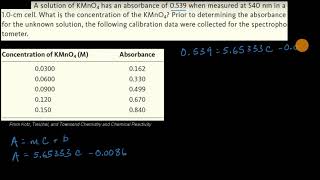 Worked example: Calculating concentration using the Beer–Lambert law ✓ Check-ins3:48
Learn this with a class
With a class on Puzzicle this course runs as a timetable of live study parties: your batch watches together and answers the check-ins, sometimes with a teacher leading.
Course content © Khan Academy, used under CC BY-NC-SA. See this course on Khan Academy.