Physics archive
The physics archive contains legacy physics content, and is not being updated with new content. We recommend checking out our middle school, high school, and AP Physics courses.
4 units84 videos8 hours
Learn it live with a class on Puzzicle · Teachers: use it with your class
Unit 1: Forces and Newton's laws of motion
Newton's laws of motion
Normal force and contact force
Unit 2: Work and energy

Unit 3: Waves
Introduction to mechanical waves
Sound
 Production of sound ✓ Check-ins3:46
 Sound properties: amplitude, period, frequency, wavelength ✓ Check-ins5:16
 Speed of sound ✓ Check-ins3:45
 Relative speed of sound in solids, liquids, and gases ✓ Check-ins3:19
 Decibel Scale ✓ Check-ins10:30
 Why do sounds get softer? ✓ Check-ins8:48
 Ultrasound medical imaging ✓ Check-ins5:35
The Doppler effect
Wave interference
 Wave interference ✓ Check-ins7:24
 Constructive and destructive interference ✓ Check-ins13:44
 Standing waves on strings ✓ Check-ins13:25
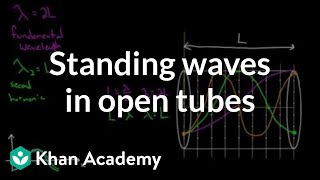 Standing waves in open tubes ✓ Check-ins14:19
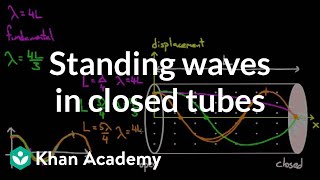 Standing waves in closed tubes ✓ Check-ins9:57
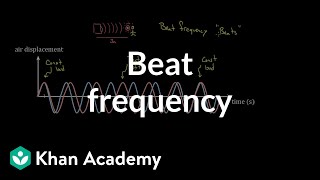 Beat frequency ✓ Check-ins11:48
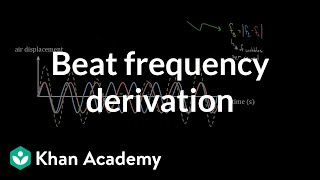 Derivation of beat frequency formula ✓ Check-ins9:55
Unit 4: Discoveries and projects
Discovery of magnetism
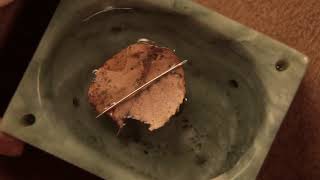

Discovery of magnetic fields

Measuring magnetic fields
Discovery of batteries
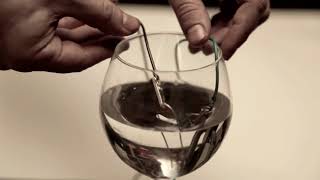 Zinc copper cell (reduction-oxidation)1:05
 Battery meter (galvanometer)0:50
 Electrolyte test (pure water vs. vinegar)1:23
 Reverse electrodes (polarity)1:23
 Electrolyte (strong acid test)0:44
 Electrolyte (salt test)1:04
 Electrode (distance test)1:06
 Electrolyte (temperature test)1:37
 Electrode (surface area test)1:07
 Standard cell1:09
 How much electrolyte does a single cell need?0:40
 The battery and electromagnetism ✓ Check-ins6:26
Discovery of electromagnetism
Discovery of resistors
Electric motor
Electrostatics


Projectile launcher

Thermo can
Learn this with a class
With a class on Puzzicle this course runs as a timetable of live study parties: your batch watches together and answers the check-ins, sometimes with a teacher leading.
Course content © Khan Academy, used under CC BY-NC-SA. See this course on Khan Academy.