6th grade math (IM® v.360 aligned)
This course contains Khan Academy practice problems crafted to support the IM® v.360 curriculum by Illustrative Mathematics® (IM), licensed under Creative Commons/Attribution/Non-commercial 4.0. Designed to make it easier for districts, teachers, and students to find and use practice problems that complement IM v.360 lessons, this course was not produced in official partnership with Illustrative Mathematics.
8 units204 videos13 hours
Learn it live with a class on Puzzicle · Teachers: use it with your class
Unit 1: Area and surface area
Tiling the plane
Finding area by decomposition and rearranging
Bases and heights of parallelograms
Area of parallelograms
Formula for area of a triangle
What is surface area?
Polyhedra
Nets and surface area
Distinguishing between surface area and volume (optional)
Squares and cubes
Surface area of a cube
Unit 2: Introducing ratios
Introducing ratios and ratio language
Representing ratios with diagrams
Defining equivalent ratios
Creating double number line diagrams
Navigating a table of equivalent ratios
Part-part-whole ratios
Unit 3: Unit rates and percentages
Comparing speeds and prices
More rate comparisons
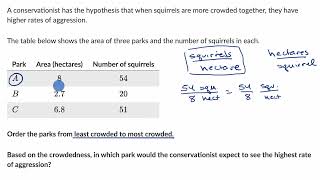
What are percentages?
Representing percentages with double number line diagrams
Representing percentages in different ways
Benchmark percentages
Solving percentage problems
Finding this percent of that
Painting a room
Unit 4: Dividing fractions
Size of divisor and size of quotient
Meaning of division
Interpreting division situations (optional)
How many groups?
Using diagrams to find the number of groups
What fraction of a group?
How much in each group? (part 1)
Dividing by unit and non-unit fractions
Using an algorithm to divide fractions
Rectangles with fractional sides
Fractional lengths in triangles and prisms
Unit 5: Arithmetic in base ten
Using decimals in a shopping context
Using diagrams to represent addition and subtraction (optional)
Adding and subtracting decimals with many non-zero digits
Using fractions to multiply decimals
Methods for multiplying decimals
Calculating products of decimals
Using partial quotients
Using long division
Dividing numbers that result in a decimal
Dividing a decimal by a decimal
Solving problems involving decimals
 Adding decimals word problem ✓ Check-ins1:33
 Adding & subtracting decimals word problem ✓ Check-ins2:19
 Solving two-step word problems involving adding and subtracting decimals ✓ Check-ins2:51
 Solving two-step word problems with decimals (adding and subtracting) ✓ Check-ins3:38
 Multiplying decimals word problems ✓ Check-ins5:59
 Multiplying decimals two-step word problems ✓ Check-ins ✎ Fixed a slip5:23
Unit 6: Expressions and equations
Tape diagrams and equations
Truth and equations
Staying in balance
Practice solving equations and representing situations with equations
 One-step addition & subtraction equations ✓ Check-ins2:09
 One-step addition equation ✓ Check-ins1:54
 One-step addition & subtraction equations: fractions & decimals ✓ Check-ins4:32
 One-step division equations10:18
 One-step multiplication equations ✓ Check-ins2:23
 One-step multiplication & division equations: fractions & decimals ✓ Check-ins7:51
Represent situations with equations
Percentages and equations
Write expressions with variables

Equal and equivalent
The distributive property, part 1
The distributive property, part 2
The distributive property, part 3 (optional)
Expressions with exponents
Equivalent exponential expressions
Two related quantities, part 1
Two related quantities, part 2
Tables, equations, and graphs, oh my!
Extra practice: Expressions
Extra practice: Equations
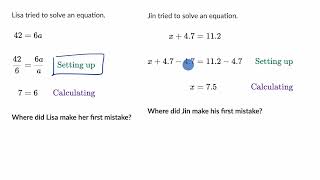
Unit 7: Rational numbers
Positive and negative numbers
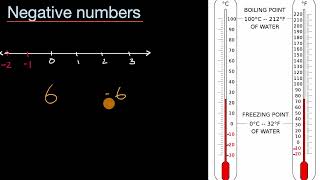
Points on the number line
Comparing positive and negative numbers
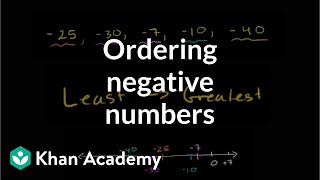
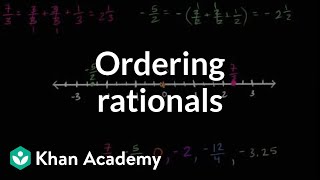
Ordering rational numbers
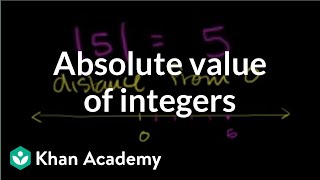
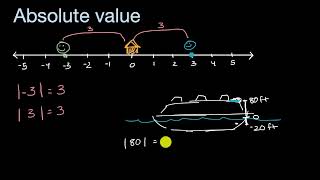
Absolute value of numbers
Comparing numbers and distance from zero
Solutions to inequalities
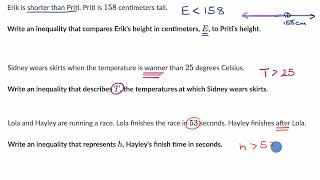
Points on the coordinate plane
Constructing the coordinate plane
Distances on a coordinate plane
Shapes on a coordinate plane
Common factors
Common multiples
Using common multiples and common factors
Drawing on the coordinate plane (optional)
Unit 8: Data sets and distribution
Statistical questions
Representing data graphically
Interpreting histograms
Using histograms to answer statistical questions
Finding and interpreting the mean as the balance point
Variability and MAD
Using mean and MAD to make comparisons
Median
Quartiles and interquartile range
Box plots
Using box plots
Using data to solve problems (optional)
Extra practice: Mean
Extra practice: Box plots
Learn this with a class
With a class on Puzzicle this course runs as a timetable of live study parties: your batch watches together and answers the check-ins, sometimes with a teacher leading.
Course content © Khan Academy, used under CC BY-NC-SA. See this course on Khan Academy.