Algebra 1 (NY Next Gen)
The Algebra 1 course, often taught in the 9th grade, covers Linear equations, inequalities, functions, and graphs; Systems of equations and inequalities; Extension of the concept of a function; Exponential models; and Quadratic equations, functions, and graphs. Khan Academy's Algebra 1 course is built to deliver a comprehensive, illuminating, engaging, and New York Next Gen aligned experience!
17 units368 videos31 hours
Learn it live with a class on Puzzicle · Teachers: use it with your class
Unit 1: Algebra foundations
Overview and history of algebra


Introduction to variables

Substitution and evaluating expressions
Combining like terms
Introduction to equivalent expressions
Unit 2: Solving equations & inequalities
Linear equations with variables on both sides
 Why we do the same thing to both sides: Variable on both sides ✓ Check-ins7:36
 Intro to equations with variables on both sides ✓ Check-ins8:53
 Equations with variables on both sides: 20-7x=6x-6 ✓ Check-ins4:06
 Equation with variables on both sides: fractions ✓ Check-ins4:50
 Equation with the variable in the denominator ✓ Check-ins3:24
Linear equations with parentheses
Analyzing the number of solutions to linear equations

Linear equations with unknown coefficients

Unit 3: Working with units
Rate conversion

Appropriate units


Unit 4: Linear equations & graphs
Two-variable linear equations intro
 Two-variable linear equations intro ✓ Check-ins8:21
 Linear equations word problems: earnings ✓ Check-ins4:03
 Modeling with linear equations: snow ✓ Check-ins4:58
 Solutions to 2-variable equations ✓ Check-ins2:35
 Worked example: solutions to 2-variable equations ✓ Check-ins2:26
 Completing solutions to 2-variable equations ✓ Check-ins7:11
Slope
Horizontal & vertical lines
x-intercepts and y-intercepts
Applying intercepts and slope
Modeling with linear equations and inequalities

Unit 5: Forms of linear equations
Intro to slope-intercept form
Graphing slope-intercept equations
Writing slope-intercept equations
Point-slope form
Standard form
Summary: Forms of two-variable linear equations

Unit 6: Systems of equations
Introduction to systems of equations
 Systems of equations: trolls, tolls (1 of 2) ✓ Check-ins6:51
 Systems of equations: trolls, tolls (2 of 2) ✓ Check-ins5:41
 Testing a solution to a system of equations ✓ Check-ins2:38
 Systems of equations with graphing: y=7/5x-5 & y=3/5x-1 ✓ Check-ins2:22
 Systems of equations with graphing: exact & approximate solutions ✓ Check-ins5:56
 Setting up a system of equations from context example (pet weights) ✓ Check-ins1:59
 Setting up a system of linear equations example (weight and price) ✓ Check-ins4:12
 Interpreting points in context of graphs of systems ✓ Check-ins5:39
Solving systems of equations with substitution
Solving systems of equations with elimination
 Systems of equations with elimination: King's cupcakes ✓ Check-ins9:00
 Elimination strategies ✓ Check-ins7:16
 Systems of equations with elimination: x-4y=-18 & -x+3y=11 ✓ Check-ins5:59
 Systems of equations with elimination: potato chips ✓ Check-ins9:21
 Systems of equations with elimination (and manipulation) ✓ Check-ins12:01
Equivalent systems of equations
Number of solutions to systems of equations
 Systems of equations number of solutions: fruit prices (1 of 2) ✓ Check-ins9:25
 Systems of equations number of solutions: fruit prices (2 of 2) ✓ Check-ins7:08
 Solutions to systems of equations: consistent vs. inconsistent ✓ Check-ins5:29
 Solutions to systems of equations: dependent vs. independent ✓ Check-ins5:10
 Number of solutions to a system of equations ✓ Check-ins3:26
 Number of solutions to a system of equations graphically ✓ Check-ins6:36
 Number of solutions to a system of equations algebraically ✓ Check-ins6:01
 How many solutions does a system of linear equations have if there are at least two? ✓ Check-ins2:12
Systems of equations word problems
 Age word problem: Imran ✓ Check-ins3:43
 Age word problem: Ben & William ✓ Check-ins6:28
 Age word problem: Arman & Diya ✓ Check-ins5:21
 System of equations word problem: walk & ride ✓ Check-ins7:00
 System of equations word problem: no solution ✓ Check-ins5:03
 System of equations word problem: infinite solutions ✓ Check-ins5:01
 Systems of equations with elimination: TV & DVD ✓ Check-ins5:51
 Systems of equations with elimination: apples and oranges ✓ Check-ins5:06
 Systems of equations with substitution: coins ✓ Check-ins5:58
 Systems of equations with elimination: coffee and croissants ✓ Check-ins4:15
Unit 7: Inequalities (systems & graphs)
Checking solutions of two-variable inequalities
Graphing two-variable inequalities
Modeling with linear inequalities
 Writing two-variable inequalities word problem ✓ Check-ins2:22
 Solving two-variable inequalities word problem ✓ Check-ins3:42
 Interpreting two-variable inequalities word problem ✓ Check-ins4:20
 Modeling with systems of inequalities ✓ Check-ins9:45
 Writing systems of inequalities word problem ✓ Check-ins4:00
 Solving systems of inequalities word problem ✓ Check-ins4:25
 Graphs of systems of inequalities word problem ✓ Check-ins3:35
 Graphs of two-variable inequalities word problem ✓ Check-ins4:59
 Creativity break: What can we do to expand our creative skills? ✓ Check-ins1:28
Unit 8: Functions
Evaluating functions
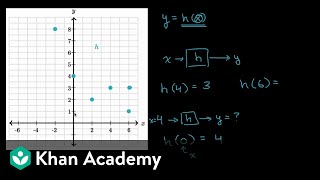
Inputs and outputs of a function
Functions and equations
Interpreting function notation
Introduction to the domain and range of a function
Determining the domain of a function
 Determining whether values are in domain of function ✓ Check-ins4:57
 Examples finding the domain of functions ✓ Check-ins4:25
 Worked example: determining domain word problem (real numbers) ✓ Check-ins2:19
 Worked example: determining domain word problem (positive integers) ✓ Check-ins2:34
 Worked example: determining domain word problem (all integers) ✓ Check-ins5:34
Recognizing functions
Maximum and minimum points
Intervals where a function is positive, negative, increasing, or decreasing
Interpreting features of graphs

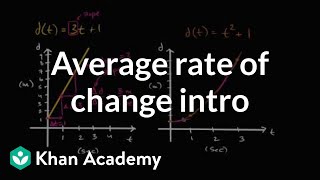
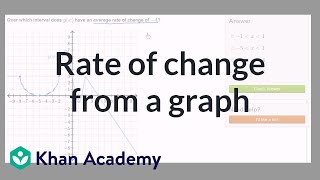
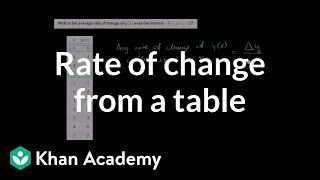
Average rate of change
Average rate of change word problems

Unit 9: Sequences
Introduction to arithmetic sequences
Constructing arithmetic sequences
Introduction to geometric sequences
Constructing geometric sequences
Modeling with sequences
Unit 10: Absolute value & piecewise functions
Graphs of absolute value functions
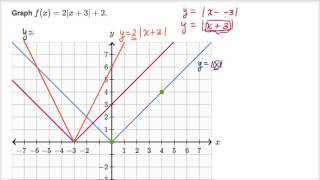
Piecewise functions
 Introduction to piecewise functions ✓ Check-ins3:49
 Worked example: evaluating piecewise functions ✓ Check-ins4:24
 Worked example: graphing piecewise functions ✓ Check-ins4:30
 Worked example: domain & range of step function ✓ Check-ins2:44
 Worked example: domain & range of piecewise linear functions ✓ Check-ins7:25
Unit 11: Exponents & radicals
Exponent properties review
Radicals
Unit 12: Exponential growth & decay
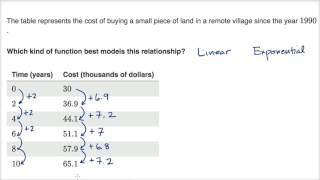
Exponential vs. linear growth
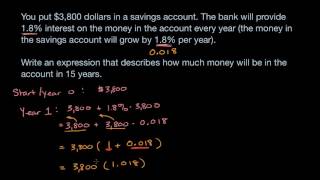
Exponential expressions
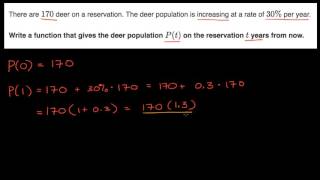
Graphs of exponential growth
Exponential vs. linear growth over time
Exponential growth & decay
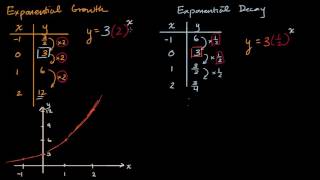
Exponential functions from tables & graphs
 Writing exponential functions ✓ Check-ins1:40
 Writing exponential functions from tables ✓ Check-ins5:17
 Writing exponential functions from graphs ✓ Check-ins7:25
 Analyzing tables of exponential functions ✓ Check-ins7:20
 Analyzing graphs of exponential functions ✓ Check-ins4:06
 Analyzing graphs of exponential functions: negative initial value ✓ Check-ins6:07
 Modeling with basic exponential functions word problem ✓ Check-ins5:37
Unit 13: Quadratics: Multiplying & factoring
Multiplying monomials by polynomials
Multiplying binomials
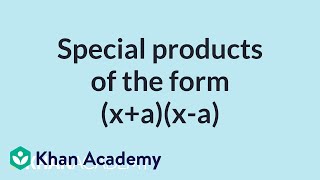
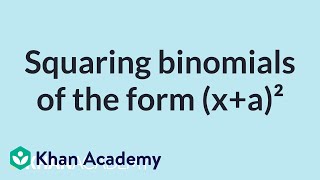
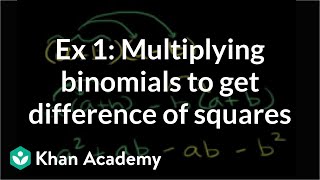
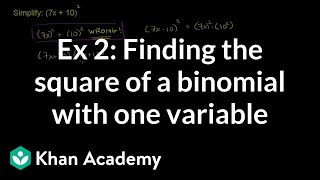
Special products of binomials
Introduction to factoring
Factoring quadratics intro
Factoring quadratics by grouping
 Intro to grouping ✓ Check-ins13:57
 Factoring quadratics by grouping ✓ Check-ins3:55
 Factoring quadratics: common factor + grouping ✓ Check-ins4:46
 Factoring quadratics: negative common factor + grouping ✓ Check-ins5:17
 Creativity break: How can we combine ways of thinking in problem solving? ✓ Check-ins2:31
Factoring quadratics with difference of squares
Factoring quadratics with perfect squares
 Perfect square factorization intro ✓ Check-ins5:19
 Factoring perfect squares ✓ Check-ins4:54
 Identifying perfect square form ✓ Check-ins4:37
 Factoring perfect squares: negative common factor ✓ Check-ins3:52
 Factoring perfect squares: missing values ✓ Check-ins2:39
 Factoring perfect squares: shared factors ✓ Check-ins4:26
Strategy in factoring quadratics
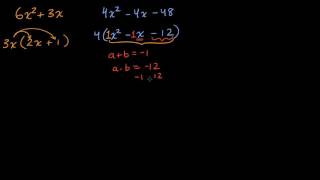
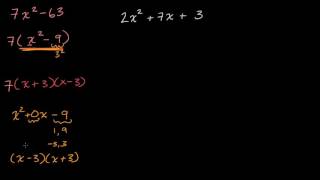
Unit 14: Quadratic functions & equations
Intro to parabolas
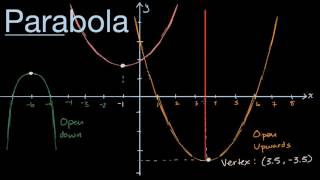
Solving and graphing with factored form
Solving by taking the square root
Vertex form
Solving quadratics by factoring
 Solving quadratics by factoring ✓ Check-ins6:22
 Solving quadratics by factoring: leading coefficient ≠ 1 ✓ Check-ins4:35
 Solving quadratics using structure ✓ Check-ins3:55
 Quadratic equations word problem: triangle dimensions ✓ Check-ins8:21
 Quadratic equations word problem: box dimensions ✓ Check-ins5:54
The quadratic formula
Completing the square intro
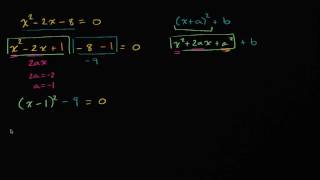
More on completing the square
 Solve by completing the square: Integer solutions ✓ Check-ins6:29
 Solve by completing the square: Non-integer solutions ✓ Check-ins4:02
 Worked example: completing the square (leading coefficient ≠ 1) ✓ Check-ins5:44
 Solving quadratics by completing the square: no solution ✓ Check-ins5:24
 Proof of the quadratic formula ✓ Check-ins7:44
Strategizing to solve quadratic equations
Quadratic standard form
Features & forms of quadratic functions
 Forms & features of quadratic functions ✓ Check-ins8:29
 Worked examples: Forms & features of quadratic functions ✓ Check-ins6:42
 Vertex & axis of symmetry of a parabola ✓ Check-ins7:22
 Finding features of quadratic functions ✓ Check-ins8:23
 Interpret quadratic models: Factored form ✓ Check-ins4:00
 Interpret quadratic models: Vertex form ✓ Check-ins5:53
 Creativity break: How does creativity play a role in your everyday life? ✓ Check-ins2:24
Comparing quadratic functions
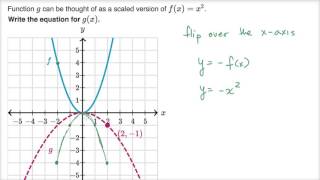
Unit 15: Irrational numbers
Irrational numbers
Sums and products of rational and irrational numbers
 Proof: sum & product of two rationals is rational ✓ Check-ins2:46
 Proof: product of rational & irrational is irrational ✓ Check-ins3:15
 Proof: sum of rational & irrational is irrational ✓ Check-ins3:24
 Sums and products of irrational numbers ✓ Check-ins5:57
 Worked example: rational vs. irrational expressions ✓ Check-ins2:36
 Worked example: rational vs. irrational expressions (unknowns) ✓ Check-ins6:26
Unit 16: Statistics & probability
Data displays
 Representing data ✓ Check-ins8:18
 Frequency tables & dot plots ✓ Check-ins7:19
 Creating a histogram ✓ Check-ins7:22
 Constructing a box plot ✓ Check-ins8:18
 Worked example: Creating a box plot (odd number of data points) ✓ Check-ins3:18
 Worked example: Creating a box plot (even number of data points) ✓ Check-ins3:15
Comparing distributions
Mean and median in data displays
Two-way tables
Distributions in two-way tables
Estimating lines of best fit
Analyzing trend lines in scatterplots

Unit 17: Creativity in algebra



Learn this with a class
With a class on Puzzicle this course runs as a timetable of live study parties: your batch watches together and answers the check-ins, sometimes with a teacher leading.
Course content © Khan Academy, used under CC BY-NC-SA. See this course on Khan Academy.