Precalculus
The Precalculus course covers complex numbers; composite functions; trigonometric functions; vectors; matrices; conic sections; and probability and combinatorics. It also has two optional units on series and limits and continuity. Khan Academy's Precalculus course is built to deliver a comprehensive, illuminating, engaging, and Common Core aligned experience!
10 units287 videos28 hours
Learn it live with a class on Puzzicle · Teachers: use it with your class
Unit 1: Composite and inverse functions
Composing functions
 Intro to composing functions ✓ Check-ins6:15
 Evaluating composite functions ✓ Check-ins4:10
 Evaluating composite functions: using tables ✓ Check-ins4:10
 Evaluating composite functions: using graphs ✓ Check-ins3:02
 Finding composite functions ✓ Check-ins2:57
 Evaluating composite functions (advanced) ✓ Check-ins4:11
Modeling with composite functions
Invertible functions
Inverse functions in graphs and tables
Unit 2: Trigonometry
Special trigonometric values in the first quadrant
Trigonometric identities on the unit circle
Inverse trigonometric functions
Law of sines
Law of cosines
Solving general triangles
Sinusoidal equations
Sinusoidal models
Angle addition identities
 Trig angle addition identities ✓ Check-ins11:07
 Using the cosine angle addition identity ✓ Check-ins5:14
 Using the cosine double-angle identity ✓ Check-ins3:28
 Proof of the sine angle addition identity ✓ Check-ins8:26
 Proof of the cosine angle addition identity ✓ Check-ins6:02
 Proof of the tangent angle sum and difference identities ✓ Check-ins6:55
Using trigonometric identities
 Finding trig values using angle addition identities ✓ Check-ins8:35
 Using the tangent angle addition identity ✓ Check-ins6:29
 Using trig angle addition identities: finding side lengths ✓ Check-ins5:20
 Using trig angle addition identities: manipulating expressions ✓ Check-ins6:12
 Using trigonometric identities ✓ Check-ins3:07
Unit 3: Complex numbers
The complex plane
Distance and midpoint of complex numbers
Complex conjugates and dividing complex numbers
Identities with complex numbers
Modulus (absolute value) and argument (angle) of complex numbers
Polar form of complex numbers
Graphically multiplying complex numbers
Multiplying and dividing complex numbers in polar form
Unit 4: Rational functions
Reducing rational expressions to lowest terms
End behavior of rational functions
Discontinuities of rational functions
Graphs of rational functions
 Graphing rational functions according to asymptotes ✓ Check-ins11:22
 Graphs of rational functions: y-intercept ✓ Check-ins3:08
 Graphs of rational functions: horizontal asymptote ✓ Check-ins3:16
 Graphs of rational functions: vertical asymptotes ✓ Check-ins5:33
 Graphs of rational functions: zeros ✓ Check-ins7:47
Modeling with rational functions
 Analyzing structure word problem: pet store (1 of 2) ✓ Check-ins5:54
 Analyzing structure word problem: pet store (2 of 2) ✓ Check-ins2:44
 Combining mixtures example ✓ Check-ins5:48
 Rational equations word problem: combined rates ✓ Check-ins5:26
 Rational equations word problem: combined rates (example 2) ✓ Check-ins6:00
 Rational equations word problem: eliminating solutions ✓ Check-ins7:59
 Reasoning about unknown variables ✓ Check-ins6:07
 Reasoning about unknown variables: divisibility ✓ Check-ins3:38
 Structure in rational expression ✓ Check-ins4:41
Multiplying and dividing rational expressions
Adding and subtracting rational expressions
 Adding & subtracting rational expressions: like denominators ✓ Check-ins3:45
 Intro to adding rational expressions with unlike denominators ✓ Check-ins2:44
 Adding rational expression: unlike denominators ✓ Check-ins5:11
 Subtracting rational expressions: unlike denominators ✓ Check-ins4:47
 Least common multiple of polynomials ✓ Check-ins6:52
 Subtracting rational expressions: factored denominators ✓ Check-ins4:48
 Subtracting rational expressions ✓ Check-ins4:36
Unit 5: Conic sections
Introduction to conic sections
Center and radii of an ellipse
Foci of an ellipse
Introduction to hyperbolas
Foci of a hyperbola
Hyperbolas not centered at the origin
Unit 6: Vectors
Vectors introduction
Vector components
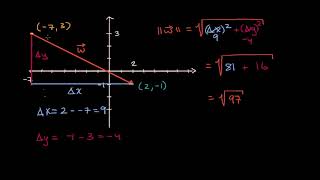
Magnitude of vectors

Scalar multiplication


Vector addition and subtraction
 Adding & subtracting vectors ✓ Check-ins7:42
 Adding & subtracting vectors end-to-end ✓ Check-ins6:22
 Parallelogram rule for vector addition ✓ Check-ins2:20
 Subtracting vectors end-to-end ✓ Check-ins1:44
 Subtracting vectors with parallelogram rule ✓ Check-ins2:46
 Vector addition & magnitude ✓ Check-ins5:30
Direction of vectors
Vector components from magnitude and direction
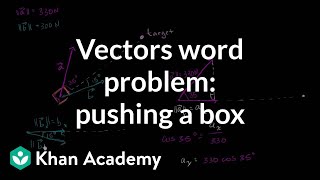
Adding vectors in magnitude and direction form
Unit 7: Matrices
Introduction to matrices
Using matrices to represent data
Multiplying matrices by scalars
Adding and subtracting matrices
Using matrices to manipulate data
Matrices as transformations of the plane
 Matrices as transformations of the plane ✓ Check-ins8:12
 Working with matrices as transformations of the plane ✓ Check-ins4:15
 Intro to determinant notation and computation ✓ Check-ins3:26
 Interpreting determinants in terms of area ✓ Check-ins4:19
 Finding area of figure after transformation using determinant ✓ Check-ins2:07
 Proof: Matrix determinant gives area of image of unit square under mapping ✓ Check-ins4:19
Using matrices to transform the plane
Transforming 3D and 4D vectors with matrices
Multiplying matrices by matrices
Properties of matrix multiplication
 Defined matrix operations ✓ Check-ins3:32
 Intro to identity matrix ✓ Check-ins7:59
 Dimensions of identity matrix ✓ Check-ins3:44
 Is matrix multiplication commutative? ✓ Check-ins7:32
 Associative property of matrix multiplication ✓ Check-ins8:37
 Zero matrix & matrix multiplication ✓ Check-ins4:42
 Using properties of matrix operations ✓ Check-ins3:30
 Using identity & zero matrices ✓ Check-ins3:58
Representing systems of equations with matrices
Introduction to matrix inverses
Finding inverses of 2x2 matrices
Solving linear systems with matrices
Unit 8: Probability and combinatorics
Venn diagrams and the addition rule
Multiplication rule for probabilities
 Compound probability of independent events ✓ Check-ins6:00
 Independent events example: test taking ✓ Check-ins4:44
 General multiplication rule example: independent events ✓ Check-ins2:29
 Dependent probability introduction ✓ Check-ins6:38
 General multiplication rule example: dependent events ✓ Check-ins2:39
 Interpreting general multiplication rule ✓ Check-ins4:51
Permutations

Combinations
Probability using combinatorics
 Probability using combinations ✓ Check-ins9:10
 Example: Lottery probability ✓ Check-ins5:10
 Example: Different ways to pick officers ✓ Check-ins2:23
 Probability with permutations & combinations example: taste testing ✓ Check-ins3:46
 Probability with combinations example: choosing groups ✓ Check-ins3:39
 Probability with combinations example: choosing cards ✓ Check-ins2:29
 Mega millions jackpot probability ✓ Check-ins5:30
Probability distributions introduction
Theoretical & empirical probability distributions
Decisions with probability
Unit 9: Series
Geometric series
Geometric series (with summation notation)
 Understanding summation notation ✓ Check-ins4:27
 Geometric series with sigma notation ✓ Check-ins4:28
 Worked example: finite geometric series (sigma notation) ✓ Check-ins2:48
 Finite geometric series word problem: social media ✓ Check-ins8:03
 Finite geometric series word problem: mortgage ✓ Check-ins17:36
The binomial theorem
Arithmetic series
 Arithmetic series intro ✓ Check-ins3:56
 Arithmetic series formula ✓ Check-ins7:47
 Worked example: arithmetic series (sigma notation) ✓ Check-ins7:02
 Worked example: arithmetic series (sum expression) ✓ Check-ins6:47
 Worked example: arithmetic series (recursive formula) ✓ Check-ins5:21
 Proof of finite arithmetic series formula ✓ Check-ins3:32
Unit 10: Limits and continuity
Defining limits and using limit notation
Estimating limit values from graphs
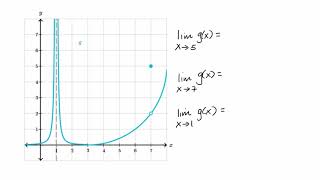
Estimating limit values from tables
Determining limits using algebraic properties of limits: limit properties
 Introducing properties of limits ✓ Check-ins5:08
 Determining limits of combined functions ✓ Check-ins4:09
 Determining limits of combined functions: piecewise functions ✓ Check-ins4:13
 Examining the theorem for limits of composite functions ✓ Check-ins3:13
 Examining the theorem for limits of composite functions: when conditions aren't met ✓ Check-ins3:22
 Determining limits of composite functions: internal limit doesn't exist ✓ Check-ins4:17
 Determining limits of composite functions: external limit doesn't exist ✓ Check-ins3:25
Determining limits using algebraic properties of limits: direct substitution
 Finding limits by direct substitution ✓ Check-ins2:07
 Examining undefined limits by direct substitution ✓ Check-ins2:14
 Determining limits of trigonometric functions ✓ Check-ins6:06
 Determining limits of piecewise functions ✓ Check-ins3:49
 Determining limits of piecewise functions: absolute value ✓ Check-ins6:20
Determining limits using algebraic manipulation
Selecting procedures for determining limits
Determining limits using the squeeze theorem
Exploring types of discontinuities
Defining continuity at a point
Confirming continuity over an interval
Removing discontinuities
Connecting infinite limits and vertical asymptotes
Connecting limits at infinity and horizontal asymptotes
 Introducing limits at infinity ✓ Check-ins2:46
 Exploring functions with same limit at infinity ✓ Check-ins3:46
 Determining limits at infinity of quotients (Part 1) ✓ Check-ins4:07
 Determining limits at infinity of quotients (Part 2) ✓ Check-ins4:33
 Determining limits at infinity of quotients with square roots (odd power) ✓ Check-ins5:14
 Determining limits at infinity of quotients with square roots (even power) ✓ Check-ins3:37
Working with the intermediate value theorem
Learn this with a class
With a class on Puzzicle this course runs as a timetable of live study parties: your batch watches together and answers the check-ins, sometimes with a teacher leading.
Course content © Khan Academy, used under CC BY-NC-SA. See this course on Khan Academy.