AP®︎/College Chemistry
Learn AP Chemistry using videos, articles, and AP-aligned practice. Review the fundamentals of atomic structure, intermolecular forces and bonding, chemical reactions, kinetics, thermodynamics, and equilibrium.
9 units211 videos27 hours
Learn it live with a class on Puzzicle · Teachers: use it with your class
Unit 1: Atomic structure and properties
Moles and molar mass
Mass spectrometry of elements
Elemental composition of pure substances
Composition of mixtures
Atomic structure and electron configuration
Periodic trends
 Periodic trends and Coulomb's law ✓ Check-ins10:43
 Atomic and ionic radii ✓ Check-ins11:26
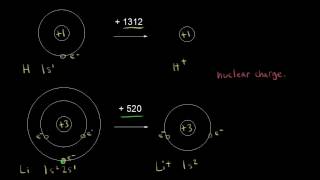 Ionization energy: group trend ✓ Check-ins10:19
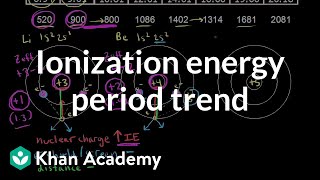 Ionization energy: period trend ✓ Check-ins10:03
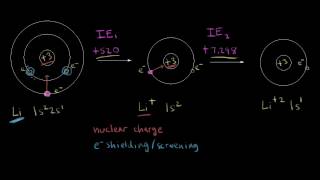 First and second ionization energy ✓ Check-ins7:35
 Worked example: Identifying an element from successive ionization energies ✓ Check-ins2:31
 Electron affinity: period trend ✓ Check-ins13:06
 Electronegativity ✓ Check-ins9:54
Valence electrons and ionic compounds
Photoelectron spectroscopy

Unit 2: Molecular and ionic compound structure and properties
Types of chemical bonds
Intramolecular force and potential energy

Structure of ionic solids
Structure of metals and alloys
Lewis diagrams
Resonance and formal charge
VSEPR
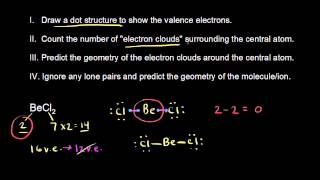 VSEPR for 2 electron clouds ✓ Check-ins8:04
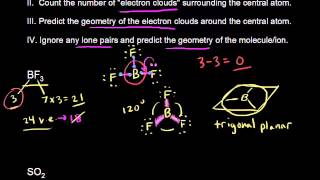 VSEPR for 3 electron clouds ✓ Check-ins12:33
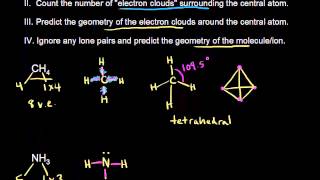 VSEPR for 4 electron clouds ✓ Check-ins10:05
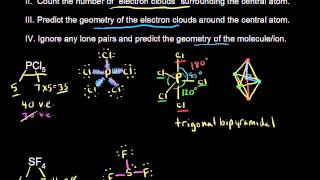 VSEPR for 5 electron clouds (part 1) ✓ Check-ins14:58
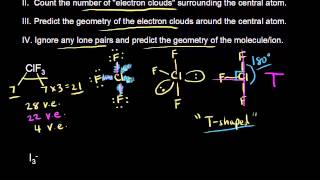 VSEPR for 5 electron clouds (part 2) ✓ Check-ins10:48
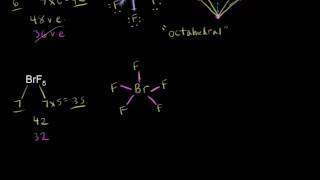 VSEPR for 6 electron clouds ✓ Check-ins12:29
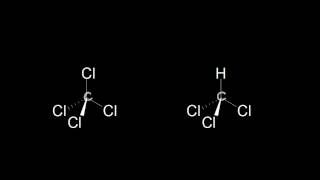 Molecular polarity ✓ Check-ins9:22
Unit 3: Intermolecular forces and properties
Intermolecular forces
Properties of solids
Solids, liquids, and gases

Ideal gas law
 The ideal gas law (PV = nRT) ✓ Check-ins6:19
 Worked example: Using the ideal gas law to calculate number of moles ✓ Check-ins7:17
 Worked example: Using the ideal gas law to calculate a change in volume ✓ Check-ins6:32
 Gas mixtures and partial pressures ✓ Check-ins6:23
 Worked example: Calculating partial pressures ✓ Check-ins8:03
Kinetic molecular theory

Deviation from ideal gas law
Solutions and mixtures

Representations of solutions
Separation of solutions and mixtures chromatography
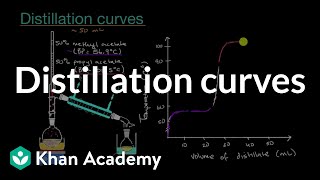

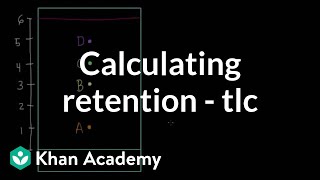

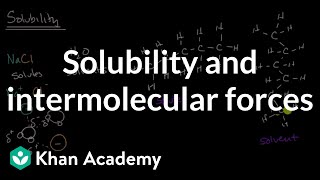
Spectroscopy and the electromagnetic spectrum
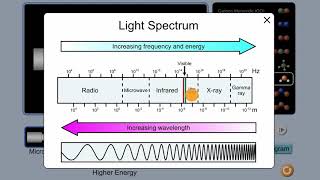
Electronic transitions in spectroscopy
Unit 4: Chemical reactions
Net ionic equations
Representations of reactions
Physical and chemical changes
Stoichiometry
Oxidation–reduction (redox) reactions
 Worked example: Using oxidation numbers to identify oxidation and reduction ✓ Check-ins5:03
 Worked example: Balancing a simple redox equation ✓ Check-ins7:11
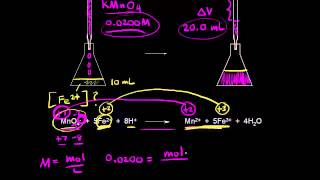
 Worked example: Balancing a redox equation in acidic solution ✓ Check-ins12:04
 Worked example: Balancing a redox equation in basic solution ✓ Check-ins14:02
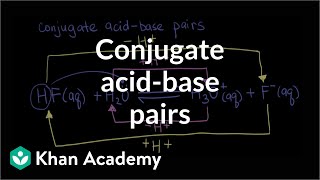
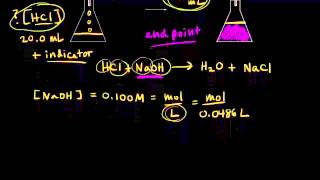
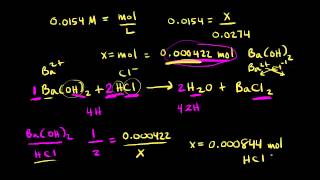
Introduction to acid–base reactions
Unit 5: Kinetics
Reaction rates
Introduction to rate law
Concentration changes over time
 First-order reactions ✓ Check-ins7:44
 Half-life of a first-order reaction ✓ Check-ins8:16
 Worked example: Using the first-order integrated rate law and half-life equations ✓ Check-ins10:20
 Second-order reactions ✓ Check-ins7:43
 Zero-order reactions ✓ Check-ins4:42
 Kinetics of radioactive decay ✓ Check-ins7:53
Reaction mechanisms
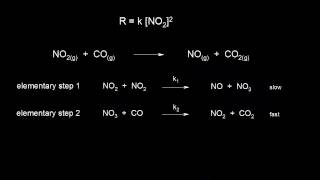
Activation energy and reaction rate
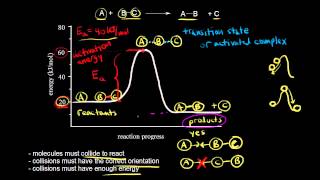

Unit 6: Thermodynamics
Endothermic and exothermic processes
Heat transfer and thermal equilibrium
Heat capacity and calorimetry
Energy of phase changes
Introduction to enthalpy of reaction
Hess's law
Enthalpy of formation
Unit 7: Equilibrium
Introduction to equilibrium
Equilibrium constant and reaction quotient
Calculating the equilibrium constant
Magnitude and properties of the equilibrium constant
Calculating equilibrium concentrations
Using the reaction quotient
Le Châtelier's principle
 Le Chȃtelier’s principle: Changing concentration ✓ Check-ins8:38
 Le Chȃtelier’s principle: Changing volume ✓ Check-ins11:09
 Le Chȃtelier’s principle: Changing temperature ✓ Check-ins11:16
 Worked example: Calculating the equilibrium total pressure after a change in volume ✓ Check-ins7:11
 Worked example: Using Le Chȃtelier’s principle to predict shifts in equilibrium ✓ Check-ins3:58
Solubility equilibria
Unit 8: Acids and bases
Introduction to acids and bases
pH and pOH of strong acids and bases
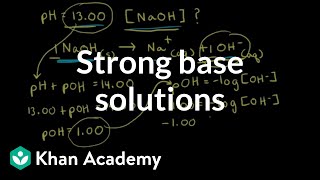
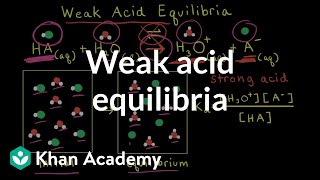
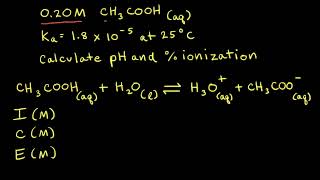
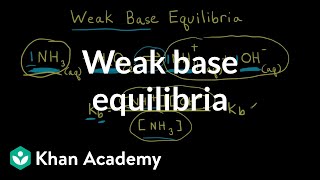
Weak acid and base equilibria
Molecular structure of acids and bases
Acid–base reactions
Buffers
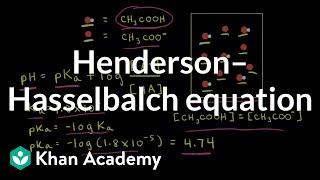
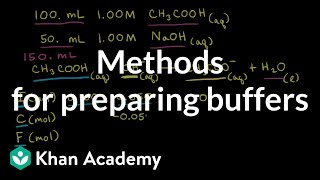
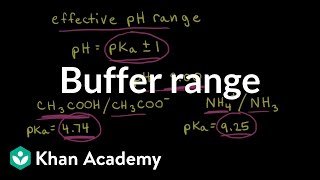
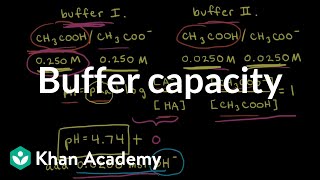
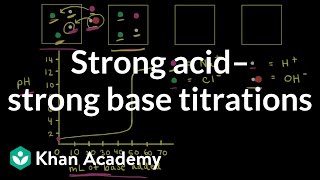
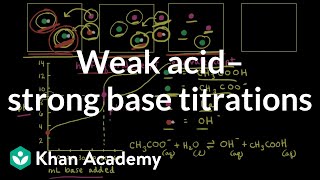
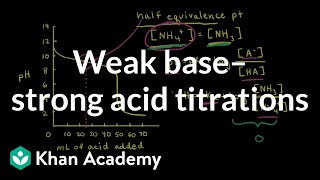
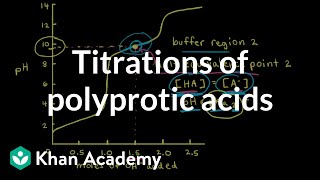
Unit 9: Applications of thermodynamics
Gibbs free energy and thermodynamic favorability
Free energy of dissolution
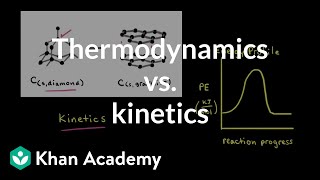
Thermodynamics vs. kinetics
Free energy and equilibrium

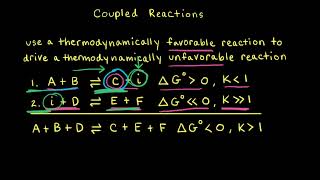
Coupled reactions
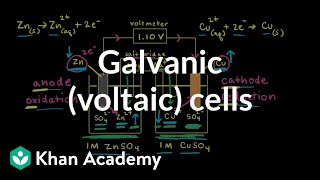
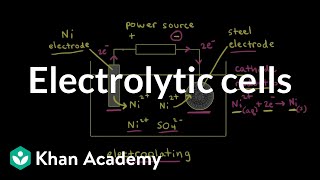
Galvanic (voltaic) and electrolytic cells
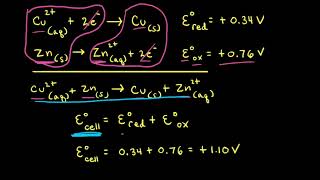
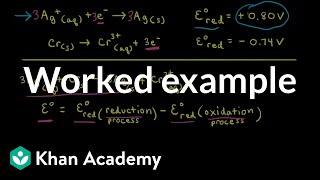
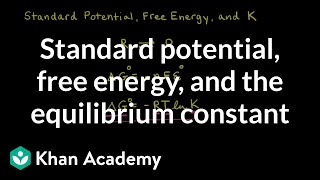
Cell potential and free energy
Cell potential under nonstandard conditions
Electrolysis and Faraday's law
Learn this with a class
With a class on Puzzicle this course runs as a timetable of live study parties: your batch watches together and answers the check-ins, sometimes with a teacher leading.
Course content © Khan Academy, used under CC BY-NC-SA. See this course on Khan Academy.