MCAT
This collection is being developed for the revised MCAT® exam that will first be administered in April 2015. The collection contains more than 1000 videos and 2800 practice questions. Content will be added to the collection through 2015. All content in this collection has been created under the direction of the Khan Academy and has been reviewed under the direction of the AAMC (Association of American Medical Colleges). All materials are categorized according to the pre-health competencies tested by the new MCAT exam; however, the content in this collection is not intended to prescribe a program of study for the new MCAT exam. These videos, questions, and articles are available under a Creative Commons Attribution-NonCommercial-ShareAlike 3.0 United States License (available at http://creativecommons.org/licenses/by-nc-sa/3.0/us/). The content is also included in the Pre-health Collection within MedEdPORTAL’s iCollaborative sponsored by the AAMC: www.mededportal.org/pre-health *MCAT® is a program of the AAMC and related trademarks owned by the Association include Medical College Admission Test, MCAT, and MCAT2015. For more information about the MCAT exam, visit www.aamc.org/mcat.
Learn it live with a class on Puzzicle · Teachers: use it with your class
Unit 1: Welcome to the MCAT course
About the MCAT and how to use this course
Unit 2: Practice Passages: Biological and Biochemical Foundations of Living Systems
Unit 3: Practice Passages: Chemical and Physical Foundations of Biological Systems
Unit 4: Practice Passages: Psychological, Social, and Biological Foundations of Behavior
Unit 5: Practice Passages: Critical Analysis and Reasoning Skills (CARS)
Critical analysis and reasoning skills (CARS) practice questions
 CARS overview ✓ Check-ins3:51
 Foundations of comprehension ✓ Check-ins11:12
 Reasoning within the text ✓ Check-ins8:12
 Reasoning beyond the text ✓ Check-ins5:58
 Worked example: Living in a rational society ✓ Check-ins19:32
 Worked example: The happy American ✓ Check-ins18:43
 Worked example: Seeing color through Homer's eyes ✓ Check-ins20:25
 Worked example: Physical education in the UK ✓ Check-ins15:10
 Worked example: The honest truth about dishonesty ✓ Check-ins27:53
Unit 6: Foundation 1: Biomolecules
Amino acids and proteins
 Amino acid structure ✓ Check-ins10:55
 Peptide bonds: Formation and cleavage ✓ Check-ins7:11
 Classification of amino acids ✓ Check-ins6:06
 Special cases: Histidine, proline, glycine, cysteine ✓ Check-ins8:18
 Isoelectric point and zwitterions ✓ Check-ins5:25
 Four levels of protein structure ✓ Check-ins8:49
 Conformational stability: Protein folding and denaturation ✓ Check-ins7:44
Protein analysis techniques

Enzyme structure and function
 Introduction to enzymes and catalysis ✓ Check-ins6:05
 Enzymes and activation energy ✓ Check-ins5:32
 Induced fit model of enzyme catalysis ✓ Check-ins6:44
 Co-factors, co-enzymes, and vitamins ✓ Check-ins5:21
 Six types of enzymes ✓ Check-ins7:04
 Enzymes and their local environment ✓ Check-ins4:31
 Non-enzymatic protein function ✓ Check-ins10:44
Enzyme kinetics
DNA and DNA replication
 DNA ✓ Check-ins13:02
 Molecular structure of DNA ✓ Check-ins13:01
 Antiparallel structure of DNA strands ✓ Check-ins9:57
 Leading and lagging strands in DNA replication ✓ Check-ins10:19
 Speed and precision of DNA replication ✓ Check-ins3:55
 Telomeres and single copy DNA vs repetitive DNA ✓ Check-ins5:34
 DNA repair 1 ✓ Check-ins11:16
 DNA repair 2 ✓ Check-ins9:18
 Semi-conservative replication ✓ Check-ins2:12
Transcription and translation
 Central dogma of molecular biology ✓ Check-ins4:22
 Central dogma - revisited ✓ Check-ins6:12
 Transcription and mRNA processing ✓ Check-ins10:25
 Translation (mRNA to protein) ✓ Check-ins14:10
 Differences in translation between prokaryotes and eukaryotes ✓ Check-ins6:36
 Protein modifications ✓ Check-ins15:43
Gene control
 Jacob-Monod: The Lac operon ✓ Check-ins6:11
 Jacob Monod lac operon ✓ Check-ins11:58
 DNA and chromatin regulation ✓ Check-ins5:21
 Regulation of transcription ✓ Check-ins6:47
 Post-transcriptional regulation ✓ Check-ins6:08
 Non-coding RNA (ncRNA) ✓ Check-ins4:40
 Oncogenes ✓ Check-ins7:01
 Tumor suppressors ✓ Check-ins4:44
Genetic mutations
Mendelian genetics and related concepts
Meiosis and other inheritance factors


DNA technology
 Evidence that DNA is genetic material 1 ✓ Check-ins4:50
 Evidence that DNA is genetic material 2 ✓ Check-ins10:16
 Gel electrophoresis ✓ Check-ins11:00
 Polymerase chain reaction (PCR) ✓ Check-ins9:54
 DNA libraries & generating cDNA ✓ Check-ins3:43
 DNA cloning and recombinant DNA ✓ Check-ins11:08
 Hybridization (microarray) ✓ Check-ins8:57
 Expressing cloned genes ✓ Check-ins3:22
 Southern blot ✓ Check-ins5:10
 DNA sequencing ✓ Check-ins4:41
 Gene expression and function ✓ Check-ins3:31
 Restriction enzymes ✓ Check-ins7:58
 Applications of DNA technologies ✓ Check-ins5:01
 Safety and ethics of DNA technologies ✓ Check-ins4:20
Evolution and population dynamics
 Hardy-Weinberg equation ✓ Check-ins8:14
 Applying the Hardy-Weinberg equation ✓ Check-ins5:30
 Evolution and natural selection ✓ Check-ins5:01
 Fitness and fecundity ✓ Check-ins4:27
 Alternative selection ✓ Check-ins4:34
 Genetic drift, bottleneck effect, and founder effect ✓ Check-ins10:47
 Inbreeding ✓ Check-ins4:43
 Reproductive isolation ✓ Check-ins4:59
Principles of bioenergetics
Overview of metabolism
 Overview of metabolism: Anabolism and catabolism ✓ Check-ins8:41
 ATP: Adenosine triphosphate ✓ Check-ins6:19
 ATP hydrolysis: Gibbs free energy ✓ Check-ins7:41
 ATP hydrolysis: Transfer of a phosphate group ✓ Check-ins9:46
 Oxidation and reduction review from biological point-of-view ✓ Check-ins13:29
 Oxidation and reduction in metabolism ✓ Check-ins10:07
 Electron carrier molecules ✓ Check-ins10:02
 ATP hydrolysis mechanism ✓ Check-ins5:35
Carbohydrates
 Carbohydrates - naming and classification ✓ Check-ins10:27
 Carbohydrates - absolute configuration, epimers, common names ✓ Check-ins11:15
 Carbohydrates - Cyclic structures and anomers ✓ Check-ins11:12
 Carbohydrates- di and polysaccharides ✓ Check-ins13:01
 Keto-enol tautomerization (by Jay) ✓ Check-ins11:29
Carbohydrate Metabolism
Krebs (citric acid) cycle and oxidative phosphorylation
 Krebs / citric acid cycle ✓ Check-ins17:47
 Regulation of pyruvate dehydrogenase ✓ Check-ins9:02
 Regulation of Krebs-TCA cycle ✓ Check-ins11:45
 Electron transport chain ✓ Check-ins17:16
 Oxidative phosphorylation and chemiosmosis ✓ Check-ins4:59
 Regulation of oxidative phosphorylation ✓ Check-ins9:50
 Calculating ATP produced in cellular respiration ✓ Check-ins15:25
Fat and protein metabolism
 Introduction to energy storage16:27
 Digestion, Mobilization, and Transport of Fats - Part I ✓ Check-ins10:08
 Digestion, Mobilization, and Transport of Fats - Part II ✓ Check-ins14:46
 Fatty Acid Synthesis - Part I ✓ Check-ins13:59
 Fatty Acid Synthesis - Part II ✓ Check-ins17:21
 Overview of Fatty Acid Oxidation ✓ Check-ins6:05
 Fatty Acid Oxidation - Part I ✓ Check-ins9:20
 Fatty Acid Oxidation - Part II ✓ Check-ins12:46
 How does the body adapt to starvation? ✓ Check-ins14:56
 Overview of Amino Acid Metabolism ✓ Check-ins13:20
Unit 7: Foundation 2: Cells
Cell membrane overview
Transport across a cell membrane
 How do things move across a cell membrane? ✓ Check-ins11:50
 Passive Transport by Facilitated Diffusion ✓ Check-ins5:16
 Diffusion and osmosis ✓ Check-ins18:59
 Exocytosis ✓ Check-ins4:17
 Membrane potentials - part 1 ✓ Check-ins8:22
 Membrane potentials - part 2 ✓ Check-ins8:45
 Permeability and membrane potentials ✓ Check-ins12:42
Cell-cell interactions

Eukaryotic cells
Cytoskeleton
Prokaryotes/bacteria
Viruses

Cellular division
Meiosis and embryology
 Comparing mitosis and meiosis ✓ Check-ins5:51
 Phases of meiosis I ✓ Check-ins9:45
 Phases of meiosis II ✓ Check-ins10:58
 Fertilization terminology ✓ Check-ins10:27
 Egg, sperm, and fertilization ✓ Check-ins11:35
 Early embryogenesis - Cleavage, blastulation, gastrulation, and neurulation ✓ Check-ins12:20
 Implantation ✓ Check-ins4:50
 Gestation ✓ Check-ins4:25
 Germ layer derivatives ✓ Check-ins2:11
Unit 8: Foundation 3: Organ systems
The nervous system
 Structure of the nervous system ✓ Check-ins8:48
 Functions of the nervous system ✓ Check-ins6:38
 Somatosensory tracts ✓ Check-ins7:07
 Autonomic vs somatic nervous system ✓ Check-ins3:48
 Motor unit ✓ Check-ins9:36
 Muscle stretch reflex ✓ Check-ins9:34
 Upper motor neurons ✓ Check-ins13:41
 Autonomic nervous system ✓ Check-ins11:24
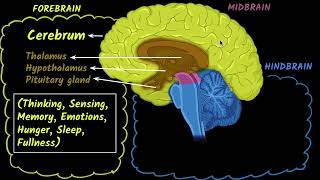 Human brain (parts & functions)4:41
Neural cells
Neuron membrane potentials
 Neuron resting potential description ✓ Check-ins7:15
 Neuron resting potential mechanism ✓ Check-ins13:16
 Neuron action potential description ✓ Check-ins6:54
 Neuron action potential mechanism ✓ Check-ins9:23
 Effects of axon diameter and myelination ✓ Check-ins10:46
 Action potential patterns ✓ Check-ins5:05
Neuronal synapses
Endocrine system and hormonal regulation
 Endocrine gland hormone review ✓ Check-ins11:39
 The hypothalamus and pituitary gland ✓ Check-ins6:35
 Hormone concentration metabolism and negative feedback ✓ Check-ins4:47
 Types of hormones ✓ Check-ins10:02
 Cellular mechanism of hormone action ✓ Check-ins8:23
 From terpenes to steroids part 1: Terpenes ✓ Check-ins7:49
 From terpenes to steroids part 2: Squalene, cholesterol, and steroids ✓ Check-ins4:29
Respiratory system
Circulatory system
 Meet the heart! ✓ Check-ins10:09
 Parts of the heart ✓ Check-ins12:13
 Flow through the heart ✓ Check-ins7:51
 Two circulations in the body ✓ Check-ins12:25
 Lub dub ✓ Check-ins9:50
 Layers of a blood vessel ✓ Check-ins10:11
 Arteries vs. veins - what's the difference? ✓ Check-ins7:44
 Resistance in a tube ✓ Check-ins8:54
 Putting it all together: Pressure, flow, and resistance ✓ Check-ins11:50
 Thermoregulation in the circulatory system ✓ Check-ins7:02
Hematologic system
 What's inside of blood? ✓ Check-ins11:09
 Hemoglobin moves O2 and CO2 ✓ Check-ins14:58
 Bohr effect vs. Haldane effect ✓ Check-ins13:53
 Blood types ✓ Check-ins8:53
 How do we make blood clots? ✓ Check-ins11:45
 Coagulation cascade ✓ Check-ins14:39
 Life and times of RBCs and platelets ✓ Check-ins10:35
 Blood cell lineages ✓ Check-ins8:04
Lymphatic system
Immune system
 Role of phagocytes in innate or nonspecific immunity ✓ Check-ins16:20
 Types of immune responses: Innate and adaptive, humoral vs. cell-mediated ✓ Check-ins8:07
 B lymphocytes (B cells) ✓ Check-ins14:13
 Professional antigen presenting cells (APC) and MHC II complexes ✓ Check-ins11:33
 Helper T cells ✓ Check-ins20:33
 Cytotoxic T cells ✓ Check-ins10:06
 Review of B cells, CD4+ T cells and CD8+ T cells ✓ Check-ins11:07
 Clonal selection ✓ Check-ins9:49
 Self vs. non-self immunity ✓ Check-ins14:29
 How white blood cells move around ✓ Check-ins8:48
 Blood cell lineages8:20
Gastrointestinal system
 Meet the gastrointestinal tract! ✓ Check-ins5:21
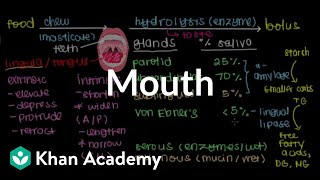 Mouth ✓ Check-ins7:30
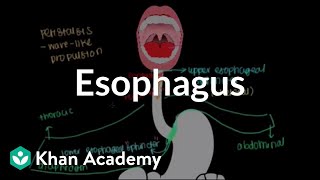 Esophagus ✓ Check-ins5:34
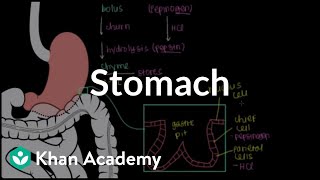 Stomach ✓ Check-ins5:58
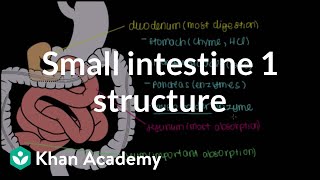 Small intestine 1: Structure6:30
 Small intestine 2: Digestion ✓ Check-ins6:45
 Small intestine 3: Absorption ✓ Check-ins4:55
 Liver ✓ Check-ins6:28
 Biliary tree ✓ Check-ins6:00
 Exocrine pancreas ✓ Check-ins9:49
 Endocrine pancreas ✓ Check-ins6:50
 Colon, rectum, and anus ✓ Check-ins9:45
 Control of the GI tract9:56
Hormonal regulation of metabolism

Renal system
 Meet the kidneys! ✓ Check-ins6:24
 Kidney function and anatomy ✓ Check-ins7:58
 Glomerular filtration in the nephron ✓ Check-ins7:18
 Changing glomerular filtration rate ✓ Check-ins4:25
 The kidney and nephron ✓ Check-ins18:38
 Secondary active transport in the nephron ✓ Check-ins14:13
 Countercurrent multiplication in the kidney ✓ Check-ins10:53
 Urination ✓ Check-ins9:33
Renal regulation of blood pressure
 General overview of the RAAS system: Cells and hormones ✓ Check-ins14:09
 Renin production in the kidneys ✓ Check-ins14:09
 Activating angiotensin 2 ✓ Check-ins10:20
 Angiotensin 2 raises blood pressure ✓ Check-ins10:40
 Aldosterone raises blood pressure and lowers potassium ✓ Check-ins13:18
 Aldosterone removes acid from the blood ✓ Check-ins11:20
 ADH secretion ✓ Check-ins15:05
 ADH effects on blood pressure ✓ Check-ins9:33
 Aldosterone and ADH ✓ Check-ins9:47
Reproductive system
 Welcome to the reproductive system ✓ Check-ins6:38
 Anatomy of the male reproductive system ✓ Check-ins10:03
 Spermatogenesis ✓ Check-ins10:28
 Testosterone ✓ Check-ins9:40
 Basics of egg development ✓ Check-ins7:19
 The ovarian cycle ✓ Check-ins10:45
 Meet the placenta! ✓ Check-ins12:33
 Reproductive cycle graph - Follicular phase ✓ Check-ins8:39
 Reproductive cycle graph - Luteal phase ✓ Check-ins9:05
 Estrogen ✓ Check-ins7:21
 Labor (parturition) ✓ Check-ins10:26
Muscular system
 Muscle innervation ✓ Check-ins5:14
 Motor neurons ✓ Check-ins7:19
 Neuromuscular junction, motor end-plate ✓ Check-ins9:00
 Three types of muscle ✓ Check-ins11:29
 Calcium puts myosin to work ✓ Check-ins10:03
 Anatomy of a skeletal muscle cell ✓ Check-ins12:42
 Myosin and actin ✓ Check-ins9:38
 How tropomyosin and troponin regulate muscle contraction ✓ Check-ins9:22
 Role of the sarcoplasmic reticulum in muscle cells ✓ Check-ins14:42
Skeletal system

Integumentary system
 Meet the skin! (Overview) ✓ Check-ins5:16
 What is skin? (Epidermis) ✓ Check-ins11:08
 What lies beneath the epidermis? (Dermis and Hypodermis) ✓ Check-ins10:07
 Where do our nails and hair come from? ✓ Check-ins8:38
 What's in sweat? (Holocrine, Apocrine, Merocrine Glands) ✓ Check-ins6:26
 LeBron Asks: Why does sweating cool you down? ✓ Check-ins5:41
 Thermoregulation mechanisms ✓ Check-ins8:23
Unit 9: Foundation 4: Physical processes
Vectors and scalars
Translational motion and calculations
 Calculating average speed and velocity edited ✓ Check-ins11:18
 Solving for time ✓ Check-ins9:35
 Displacement from time and velocity example ✓ Check-ins5:00
 Instantaneous speed and velocity ✓ Check-ins4:38
 Acceleration ✓ Check-ins9:06
 Airbus A380 take-off time ✓ Check-ins8:08
 Airbus A380 take-off distance ✓ Check-ins5:29
 Why distance is area under velocity-time line ✓ Check-ins9:26
 Average velocity for constant acceleration ✓ Check-ins14:10
Force and Newton's laws of motion
Vector analysis and forces acting on an object
 Balanced and unbalanced forces ✓ Check-ins8:11
 Normal force and contact force ✓ Check-ins7:18
 Normal force in an elevator ✓ Check-ins11:49
 Slow sock on Lubricon VI ✓ Check-ins4:47
 Normal forces on Lubricon VI ✓ Check-ins7:12
 Inclined plane force components ✓ Check-ins12:42
 Ice accelerating down an incline ✓ Check-ins10:37
 Force of friction keeping the block stationary ✓ Check-ins8:19
 Correction to force of friction keeping the block stationary0:51
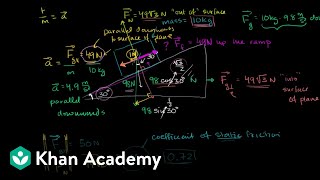 Force of friction keeping velocity constant ✓ Check-ins8:58
 Introduction to tension ✓ Check-ins10:19
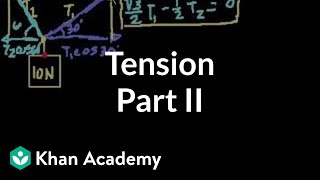 Introduction to tension (part 2) ✓ Check-ins10:19
 Tension in an accelerating system and pie in the face ✓ Check-ins9:28
 Intuition on static and kinetic friction comparisons ✓ Check-ins7:21
 Static and kinetic friction example ✓ Check-ins9:50
Work and energy
 Introduction to work and energy ✓ Check-ins9:18
 Work and energy (part 2) ✓ Check-ins9:51
 Work and the work-energy theorem ✓ Check-ins5:48
 Work as the transfer of energy ✓ Check-ins3:17
 Work example problems ✓ Check-ins4:50
 Conservation of energy ✓ Check-ins9:57
 Work/energy problem with friction ✓ Check-ins10:05
 Intro to springs and Hooke's law ✓ Check-ins10:05
 Potential energy stored in a spring ✓ Check-ins10:00
 Spring potential energy example (mistake in math) ✓ Check-ins9:38
 Conservative forces ✓ Check-ins4:02
 Power ✓ Check-ins5:46
 Introduction to mechanical advantage ✓ Check-ins10:02
Fluids at rest
 Pressure and Pascal's principle (part 1) ✓ Check-ins9:46
 Pressure and Pascal's principle (part 2) ✓ Check-ins10:12
 Pressure at a depth in a fluid ✓ Check-ins9:54
 Finding height of fluid in a barometer ✓ Check-ins10:09
 Archimedes principle and buoyant force ✓ Check-ins8:41
 Buoyant force example problems edited ✓ Check-ins9:22
 Specific gravity ✓ Check-ins3:10
Fluids in motion
 Volume flow rate and equation of continuity ✓ Check-ins9:59
 Bernoulli's equation derivation part 1 ✓ Check-ins10:08
 Bernoulli's equation derivation part 2 ✓ Check-ins10:09
 Finding fluid speed exiting hole ✓ Check-ins8:35
 More on finding fluid speed from hole ✓ Check-ins5:19
 Finding flow rate from Bernoulli's equation ✓ Check-ins7:46
 Viscosity and Poiseuille flow ✓ Check-ins11:06
 Turbulence at high velocities and Reynold's number ✓ Check-ins2:10
 Surface Tension and Adhesion ✓ Check-ins6:38
 Venturi effect and Pitot tubes ✓ Check-ins9:58
- Two circulations in the body ✓ Check-ins12:25
- Arteries vs. veins - what's the difference? ✓ Check-ins7:44
- Resistance in a tube ✓ Check-ins8:54
- Putting it all together: Pressure, flow, and resistance ✓ Check-ins11:50
Gas phase
 Absolute temperature and the kelvin scale10:14
 Pressure and the simple mercury barometer ✓ Check-ins7:51
 Definition of an ideal gas, ideal gas law ✓ Check-ins5:43
 Derivation of gas constants using molar volume and STP ✓ Check-ins7:31
 Boyle's law ✓ Check-ins10:45
 Charles's law8:07
 Avogadro's law ✓ Check-ins8:12
 The van der Waals equation ✓ Check-ins5:17
 Partial pressure ✓ Check-ins12:18
Kinetic molecular theory of gases
Electrostatics
Current and resistance

Capacitors
Magnetism
Electrochemistry
 Redox reaction from dissolving zinc in copper sulfate ✓ Check-ins5:01
 Introduction to galvanic/voltaic cells ✓ Check-ins6:00
 Electrodes and voltage of Galvanic cell ✓ Check-ins4:33
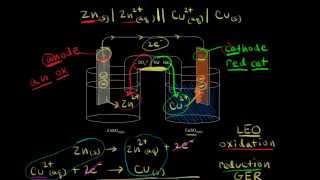 Shorthand notation for galvanic/voltaic cells ✓ Check-ins7:17
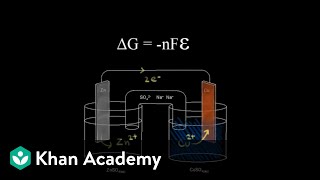 Free energy and cell potential ✓ Check-ins7:48
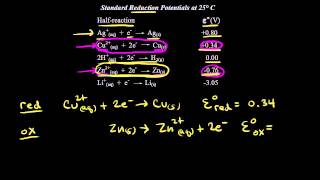 Standard reduction potentials ✓ Check-ins9:10
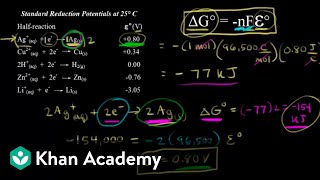 Voltage as an intensive property ✓ Check-ins4:39
 Using reduction potentials ✓ Check-ins6:04
 Spontaneity and redox reactions ✓ Check-ins12:22
 Standard cell potential and the equilibrium constant ✓ Check-ins4:38
 Calculating the equilibrium constant from the standard cell potential edited ✓ Check-ins9:39
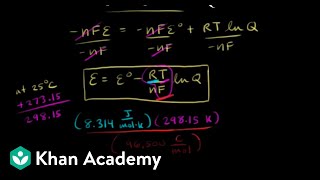 Nernst equation5:51
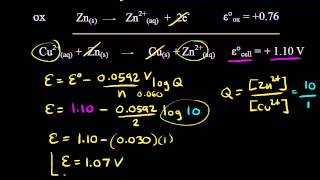 Using the Nernst equation11:30
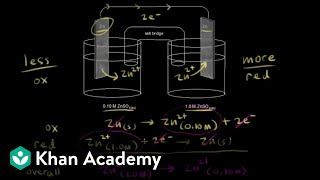 Concentration cell ✓ Check-ins9:03
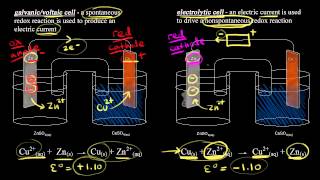 Introduction to electrolysis ✓ Check-ins6:55
 Quantitative electrolysis ✓ Check-ins6:40
 Electrolysis of molten sodium chloride edited ✓ Check-ins10:27
 Lead storage battery ✓ Check-ins9:06
 Nickel-cadmium battery ✓ Check-ins11:07
Sound
 Production of sound ✓ Check-ins3:46
 Sound properties: amplitude, period, frequency, wavelength ✓ Check-ins5:16
 Speed of sound ✓ Check-ins3:45
 Relative speed of sound in solids, liquids, and gases ✓ Check-ins3:19
 Decibel Scale ✓ Check-ins10:30
 Why do sounds get softer? ✓ Check-ins8:48
 Ultrasound medical imaging ✓ Check-ins5:35
 Standing waves in open tubes ✓ Check-ins14:19
 Standing waves in closed tubes ✓ Check-ins9:57
 Doppler effect introduction ✓ Check-ins10:36
 Doppler effect formula for observed frequency ✓ Check-ins10:13
 Doppler effect formula when source is moving away ✓ Check-ins9:18
 When the source and the wave move at the same velocity ✓ Check-ins7:35
 Doppler effect for a moving observer ✓ Check-ins5:16
 Doppler effect: reflection off a moving object ✓ Check-ins7:49
Light and electromagnetic radiation
 Electromagnetic waves and the electromagnetic spectrum ✓ Check-ins11:02
 Polarization of light ✓ Check-ins14:30
 Wave interference ✓ Check-ins14:29
 Young's double slit introduction ✓ Check-ins9:33
 Young's double slit equation ✓ Check-ins6:41
 Young's double slit problem solving ✓ Check-ins7:09
 Diffraction grating ✓ Check-ins14:21
 Single slit interference ✓ Check-ins15:00
 More on single slit interference ✓ Check-ins13:06
 Thin film interference (part 1) ✓ Check-ins12:03
 Thin film interference (part 2) ✓ Check-ins12:03
 Photon energy ✓ Check-ins9:18
Infrared and Ultraviolet/Visible spectroscopy
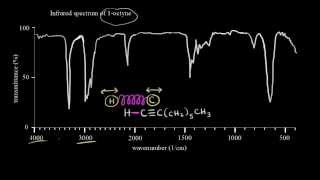 Introduction to infrared spectroscopy ✓ Check-ins9:25
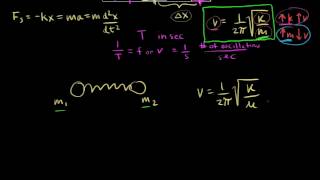 Bonds as springs ✓ Check-ins12:20
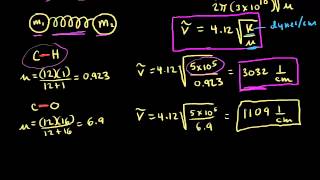 Signal characteristics - wavenumber ✓ Check-ins15:25
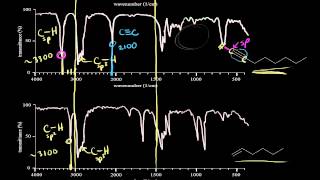 IR spectra for hydrocarbons ✓ Check-ins13:02
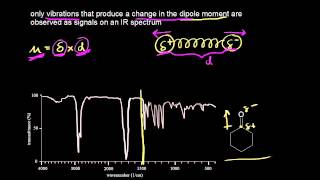 Signal characteristics - intensity ✓ Check-ins5:35
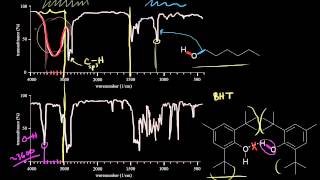 Signal characteristics - shape ✓ Check-ins9:17
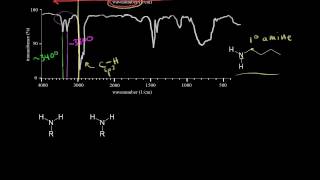 Symmetric and asymmetric stretching ✓ Check-ins11:02
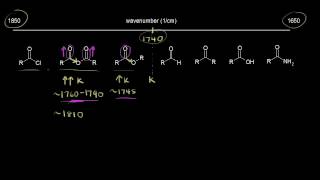 IR signals for carbonyl compounds ✓ Check-ins12:52
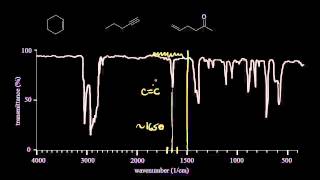 IR spectra practice ✓ Check-ins5:54
 UV/Vis spectroscopy ✓ Check-ins11:12
 Absorption in the visible region ✓ Check-ins5:11
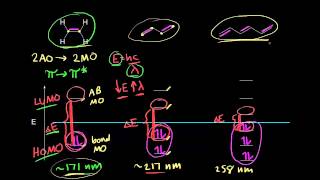 Conjugation and color ✓ Check-ins9:34
Proton nuclear magnetic resonance
 Introduction to proton NMR ✓ Check-ins10:27
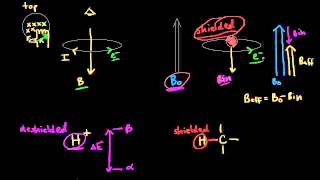 Nuclear shielding ✓ Check-ins10:22
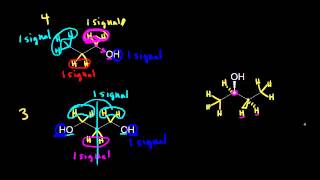 Chemical equivalence ✓ Check-ins10:44
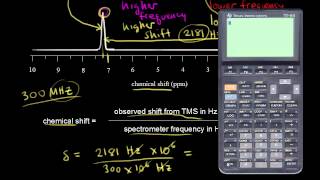 Chemical shift ✓ Check-ins5:51
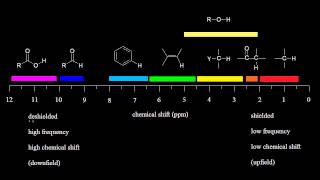 Electronegativity and chemical shift ✓ Check-ins11:02
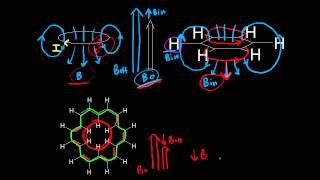 Diamagnetic anisotropy ✓ Check-ins9:18
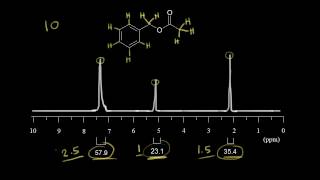 Integration ✓ Check-ins4:30
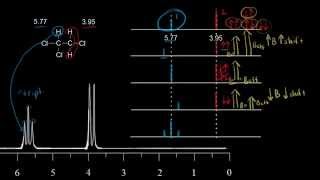 Spin-spin splitting (coupling) ✓ Check-ins12:22
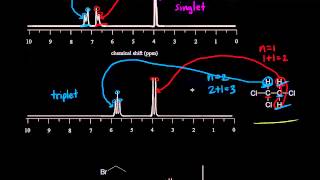 Multiplicity: n + 1 rule ✓ Check-ins9:45
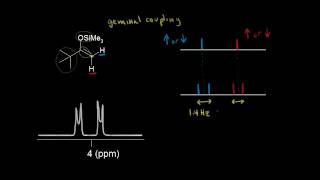 Coupling constant ✓ Check-ins6:10
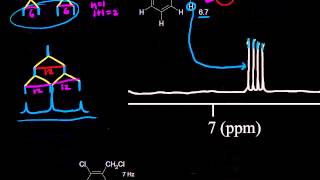 Complex splitting ✓ Check-ins7:55
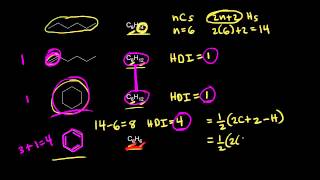 Hydrogen deficiency index ✓ Check-ins8:51
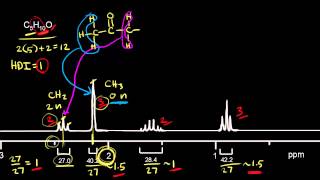 Proton NMR practice 1 ✓ Check-ins11:36
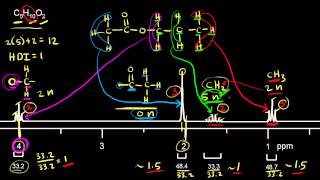 Proton NMR practice 2 ✓ Check-ins13:31
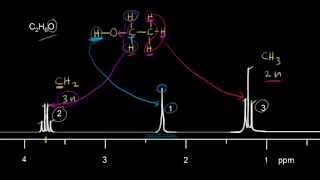 Proton NMR practice 3 ✓ Check-ins7:23
Thin lenses
 Convex lenses ✓ Check-ins9:23
 Convex lens examples ✓ Check-ins9:36
 Concave lenses ✓ Check-ins3:06
 Object image and focal distance relationship (proof of formula) ✓ Check-ins12:29
 Object image height and distance relationship ✓ Check-ins2:22
 Thin lens equation and problem solving ✓ Check-ins12:57
 Multiple lens systems ✓ Check-ins14:07
 Diopters, Aberration, and the Human Eye ✓ Check-ins12:57
Spherical mirrors


Reflection and refraction
Atomic nucleus
 Atomic number, mass number, and isotopes ✓ Check-ins9:44
 Atomic mass ✓ Check-ins8:33
 Mass defect and binding energy ✓ Check-ins11:28
 Nuclear stability and nuclear equations ✓ Check-ins8:25
 Writing nuclear equations for alpha, beta, and gamma decay ✓ Check-ins8:07
 Types of decay ✓ Check-ins17:03
 Half-life and carbon dating ✓ Check-ins ✎ Fixed a slip12:31
 Half-life plot ✓ Check-ins6:47
 Exponential decay formula proof (can skip, involves calculus) ✓ Check-ins12:22
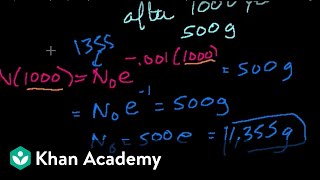 Introduction to exponential decay ✓ Check-ins6:52
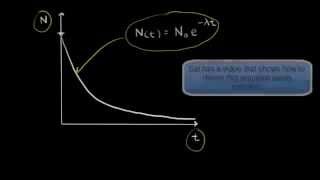 Exponential decay and semi-log plots ✓ Check-ins10:16
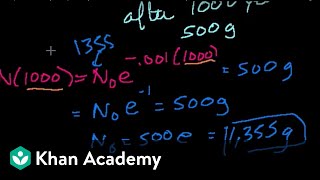 More exponential decay examples7:06
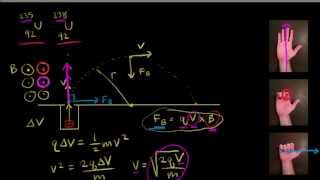 Mass spectrometer ✓ Check-ins11:30
Electronic structure
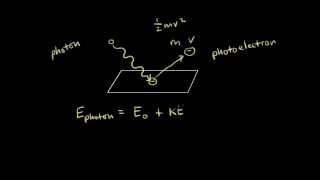 Photoelectric effect10:24
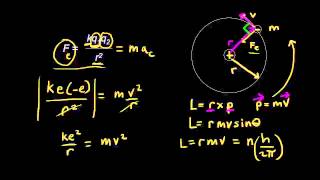 Bohr model radii (derivation using physics) ✓ Check-ins10:52
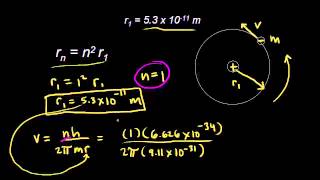 Bohr model radii ✓ Check-ins6:57
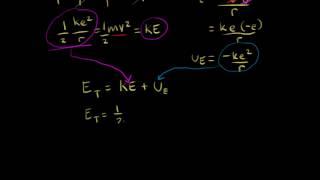 Bohr model energy levels (derivation using physics) ✓ Check-ins12:08
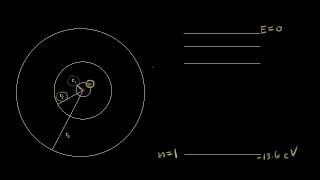 Bohr model energy levels9:47
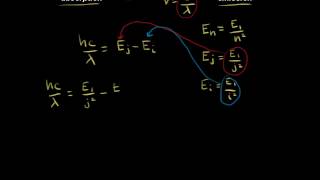 Absorption and emission ✓ Check-ins10:30
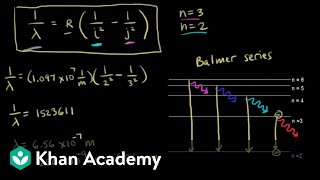 Emission spectrum of hydrogen ✓ Check-ins10:46
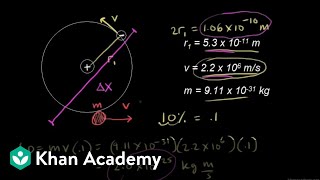 Heisenberg uncertainty principle ✓ Check-ins9:39
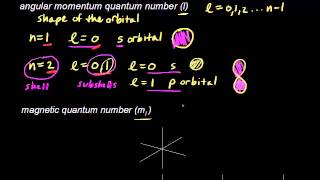 Quantum numbers ✓ Check-ins12:00
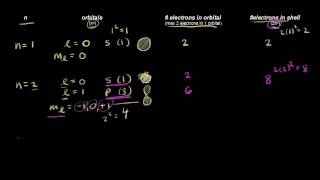 Quantum numbers for the first four shells ✓ Check-ins12:37
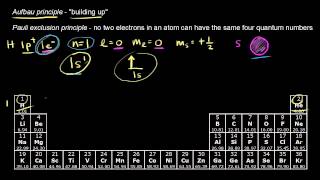 Electron configurations for the first period ✓ Check-ins6:22
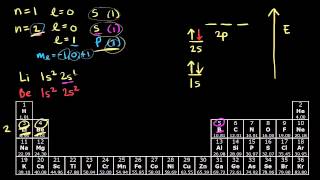 Electron configurations for the second period ✓ Check-ins12:12
 Electron configurations for the third and fourth periods ✓ Check-ins13:08
 Electron configurations of the 3d transition metals ✓ Check-ins12:33
 Paramagnetism and diamagnetism ✓ Check-ins8:05
Periodic table
 Electronegativity and bonding ✓ Check-ins11:39
 The periodic table ✓ Check-ins8:56
 The periodic table - transition metals ✓ Check-ins5:34
 Counting valence electrons for main group elements ✓ Check-ins8:19
 Atomic and ionic radii ✓ Check-ins11:26
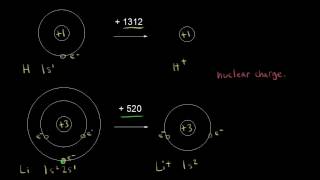 Ionization energy: group trend ✓ Check-ins10:19
 Ionization energy: period trend ✓ Check-ins10:03
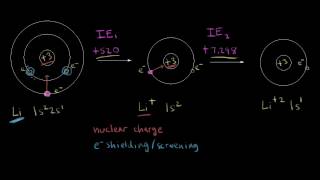 First and second ionization energy ✓ Check-ins7:35
 Electron affinity: period trend ✓ Check-ins13:06
Stoichiometry
 Empirical formula from mass composition edited ✓ Check-ins6:13
 Molecular and empirical formulas15:11
 The mole and Avogadro's number ✓ Check-ins8:57
 Stoichiometry example problem 1 ✓ Check-ins11:36
 Stoichiometry ✓ Check-ins9:24
 Limiting reactant example problem 1 edited ✓ Check-ins18:04
- Specific gravity ✓ Check-ins3:10
Balancing chemical equations
Unit 10: Foundation 5: Chemical processes
Acid/base equilibria
 Acid-base definitions ✓ Check-ins7:49
 Ka and acid strength ✓ Check-ins9:18
 Autoionization of water ✓ Check-ins7:35
 Definition of pH ✓ Check-ins12:10
 Strong acid solutions ✓ Check-ins6:18
 Strong base solutions ✓ Check-ins5:27
 Weak acid equilibrium ✓ Check-ins9:31
 Weak base equilibrium ✓ Check-ins11:22
 Relationship between Ka and Kb ✓ Check-ins11:20
 Acid–base properties of salts ✓ Check-ins13:33
 pH of salt solutions ✓ Check-ins14:15
 Common ion effect and buffers ✓ Check-ins13:19
 Buffer solutions ✓ Check-ins6:37
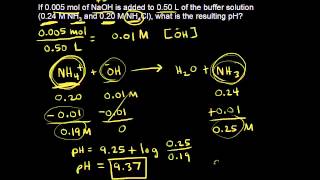 Buffer solution pH calculations ✓ Check-ins11:39
Titrations
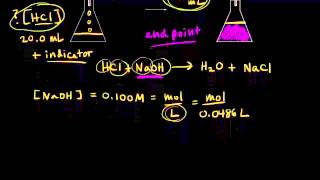 Acid–base titrations ✓ Check-ins8:50
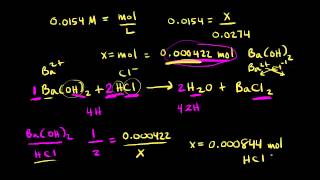 Worked example: Determining solute concentration by acid–base titration ✓ Check-ins7:50
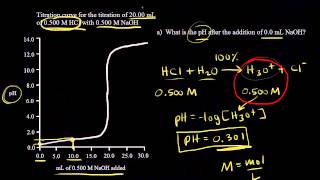 Titration of a strong acid with a strong base ✓ Check-ins10:12
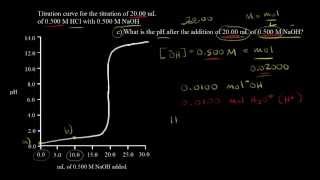 Titration of a strong acid with a strong base (continued) ✓ Check-ins10:17
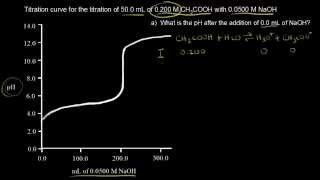 Titration of a weak acid with a strong base ✓ Check-ins14:27
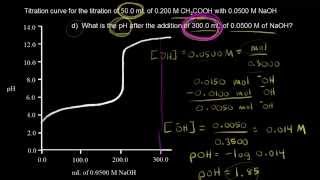 Titration of a weak acid with a strong base (continued) ✓ Check-ins15:13
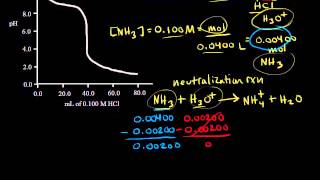 Titration of a weak base with a strong acid ✓ Check-ins14:58
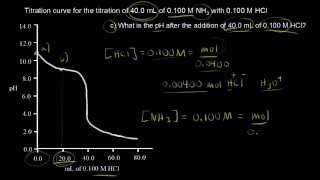 Titration of a weak base with a strong acid (continued) ✓ Check-ins14:48
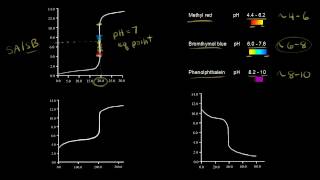 Titration curves and acid-base indicators ✓ Check-ins7:10
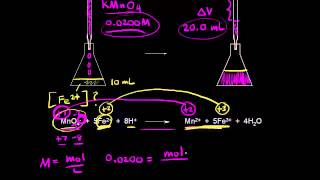 Redox titrations ✓ Check-ins7:58
Solubility equilibria
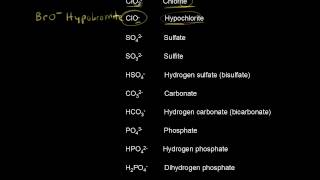 Common polyatomic ions ✓ Check-ins5:48
 Dissolution and precipitation ✓ Check-ins10:00
 Introduction to solubility equilibria ✓ Check-ins8:17
 Worked example: Calculating solubility from Kₛₚ ✓ Check-ins4:52
 The common-ion effect ✓ Check-ins10:08
 pH and solubility ✓ Check-ins5:14
 Solubility and complex ion formation ✓ Check-ins14:50
Dot structures
 Drawing dot structures ✓ Check-ins14:42
 Formal charge and dot structures ✓ Check-ins11:30
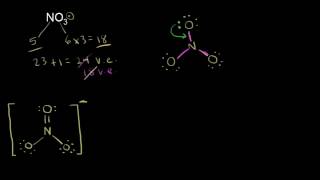 Resonance and dot structures ✓ Check-ins6:15
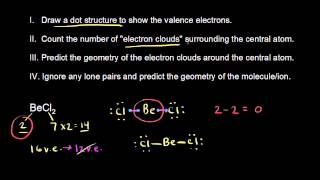 VSEPR for 2 electron clouds ✓ Check-ins8:04
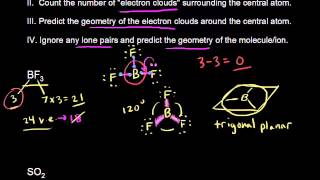 VSEPR for 3 electron clouds ✓ Check-ins12:33
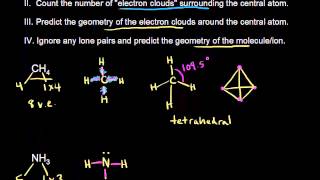 VSEPR for 4 electron clouds ✓ Check-ins10:05
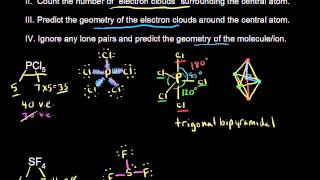 VSEPR for 5 electron clouds (part 1) ✓ Check-ins14:58
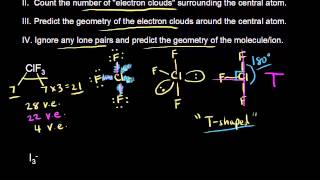 VSEPR for 5 electron clouds (part 2) ✓ Check-ins10:48
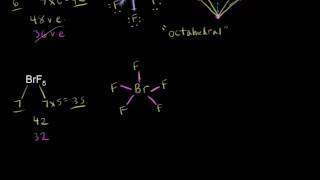 VSEPR for 6 electron clouds ✓ Check-ins12:29
Stereochemistry
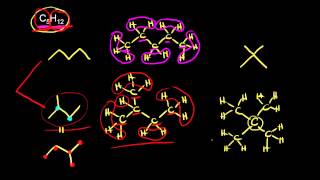 Structural (constitutional) isomers ✓ Check-ins9:52
 Chiral vs achiral ✓ Check-ins4:17
 Stereoisomers, enantiomers, and chirality centers ✓ Check-ins5:28
 Identifying chirality centers ✓ Check-ins8:08
 R,S system ✓ Check-ins9:47
 R,S system practice ✓ Check-ins8:44
 Optical activity ✓ Check-ins9:02
 Enantiomers and diastereomers ✓ Check-ins8:09
 Cis–trans isomerism ✓ Check-ins5:24
 E–Z system ✓ Check-ins11:34
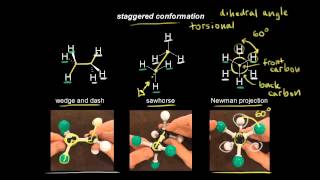 Conformations of ethane ✓ Check-ins10:03
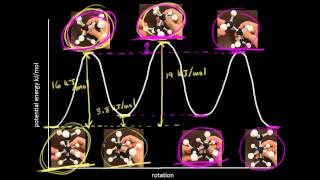 Conformational analysis of butane ✓ Check-ins10:14
Covalent bonds
- Electronegativity and bonding ✓ Check-ins11:39
 Intermolecular forces ✓ Check-ins8:36
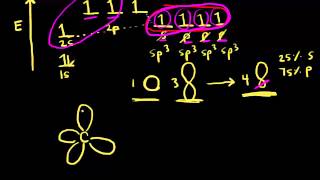 sp³ hybridization ✓ Check-ins10:43
 Steric number ✓ Check-ins9:47
 Molecular polarity ✓ Check-ins9:22
 sp² hybridization ✓ Check-ins12:42
 sp hybridization ✓ Check-ins11:00
 Worked examples: Finding the hybridization of atoms in organic molecules ✓ Check-ins10:21
- Acid-base definitions ✓ Check-ins7:49
Separations and purifications
 Simple and fractional distillations ✓ Check-ins9:30
 Extractions ✓ Check-ins8:39
 Basics of chromatography ✓ Check-ins9:16
 Thin layer chromatography (TLC) ✓ Check-ins5:07
 Calculating retention factors for TLC ✓ Check-ins7:21
 Column chromatography ✓ Check-ins6:39
 Gas chromatography ✓ Check-ins8:38
 Gel electrophoresis ✓ Check-ins6:59
 Resolution of enantiomers ✓ Check-ins5:02
Nucleic acids, lipids, and carbohydrates
 Nucleic acid structure 1 ✓ Check-ins10:03
- Antiparallel structure of DNA strands ✓ Check-ins9:57
 Saponification - Base promoted ester hydrolysis ✓ Check-ins7:56
 Lipids - Structure in cell membranes ✓ Check-ins10:11
 Lipids as cofactors and signaling molecules ✓ Check-ins7:43
 Carbohydrates - Naming and classification ✓ Check-ins10:28
 Fischer projections ✓ Check-ins13:52
 Carbohydrates - Epimers, common names ✓ Check-ins11:17
- Carbohydrates - Cyclic structures and anomers ✓ Check-ins11:12
 Carbohydrate - Glycoside formation hydrolysis ✓ Check-ins10:42
 Keto-enol tautomerization (by Sal) ✓ Check-ins8:03
 Disaccharides and polysaccharides ✓ Check-ins13:03
Amino acids, peptides, proteins
- Central dogma of molecular biology ✓ Check-ins4:22
- Central dogma - revisited ✓ Check-ins6:12
- Amino acid structure ✓ Check-ins10:55
- Peptide bonds: Formation and cleavage ✓ Check-ins7:11
- Special cases: Histidine, proline, glycine, cysteine ✓ Check-ins8:18
- Isoelectric point and zwitterions ✓ Check-ins5:25
- Classification of amino acids ✓ Check-ins6:06
- Four levels of protein structure ✓ Check-ins8:49
- Conformational stability: Protein folding and denaturation ✓ Check-ins7:44
Proteins
- Amino acid structure ✓ Check-ins10:55
 Alpha amino acid synthesis ✓ Check-ins5:24
- Classification of amino acids ✓ Check-ins6:06
- Peptide bonds: Formation and cleavage ✓ Check-ins7:11
- Four levels of protein structure ✓ Check-ins8:49
 Conformational stability: Protein folding and denaturation ✓ Check-ins7:44
- Non-enzymatic protein function ✓ Check-ins10:44
Carbohydrates
- Carbohydrates- di and polysaccharides ✓ Check-ins13:01
 Carbohydrates - cyclic structures and anomers ✓ Check-ins11:11
- Carbohydrates - absolute configuration, epimers, common names ✓ Check-ins11:15
- Carbohydrates - naming and classification ✓ Check-ins10:27
- Keto-enol tautomerization (by Jay) ✓ Check-ins11:29
Alpha-carbon chemistry
- Keto-enol tautomerization (by Jay) ✓ Check-ins11:29
 Enolate formation from aldehydes ✓ Check-ins6:12
 Enolate formation from ketones ✓ Check-ins10:18
 Kinetic and thermodynamic enolates ✓ Check-ins8:19
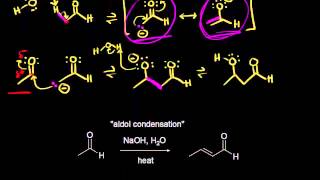 Aldol condensation ✓ Check-ins11:23
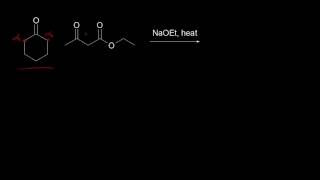 Mixed (crossed) aldol condensation ✓ Check-ins9:25
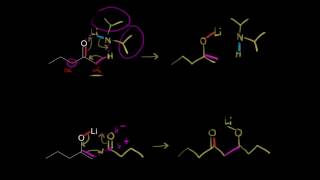 Mixed (crossed) aldol condensation using a lithium enolate9:01
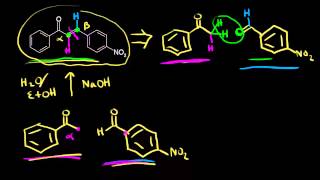 Retro-aldol and retrosynthesis ✓ Check-ins11:13
 Intramolecular aldol condensation ✓ Check-ins12:02
Aldehydes and ketones
 Nomenclature of aldehydes and ketones12:38
 Physical properties of aldehydes and ketones ✓ Check-ins10:13
 Reactivity of aldehydes and ketones ✓ Check-ins10:05
 Formation of hydrates ✓ Check-ins7:27
 Formation of hemiacetals and hemiketals ✓ Check-ins10:44
 Acid and base catalyzed formation of hydrates and hemiacetals ✓ Check-ins10:26
 Formation of acetals ✓ Check-ins14:15
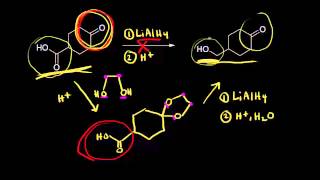 Acetals as protecting groups and thioacetals ✓ Check-ins8:25
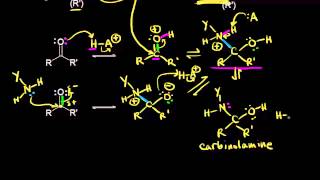 Formation of imines and enamines13:33
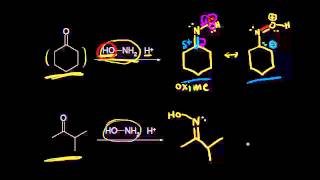 Formation of oximes and hydrazones ✓ Check-ins9:40
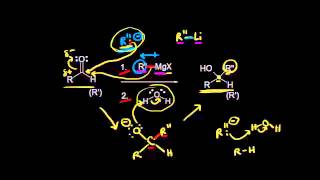 Addition of carbon nucleophiles to aldehydes and ketones ✓ Check-ins9:33
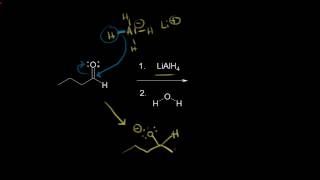 Formation of alcohols using hydride reducing agents ✓ Check-ins11:35
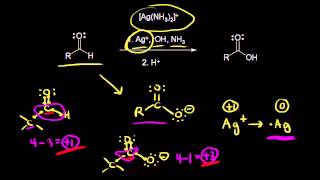 Oxidation of aldehydes using Tollens' reagent ✓ Check-ins9:21
Alcohols and phenols
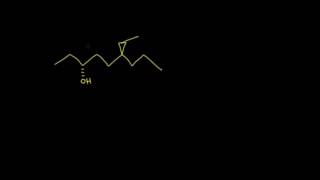 Alcohol nomenclature ✓ Check-ins12:07
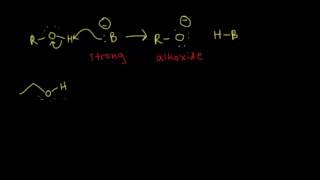 Properties of alcohols ✓ Check-ins11:17
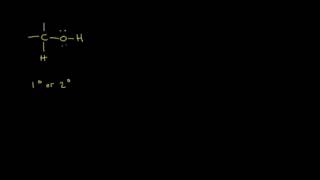 Oxidation of alcohols ✓ Check-ins12:39
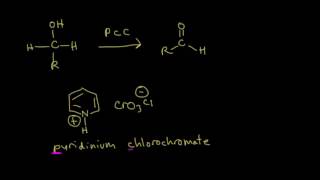 Oxidation of alcohols (examples) ✓ Check-ins7:03
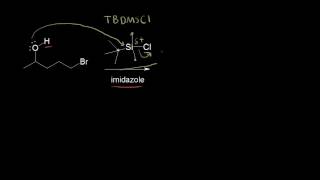 Protection of alcohols ✓ Check-ins7:54
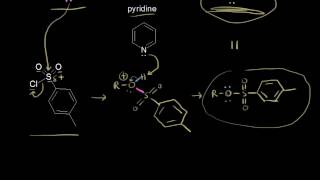 Preparation of mesylates and tosylates ✓ Check-ins8:41
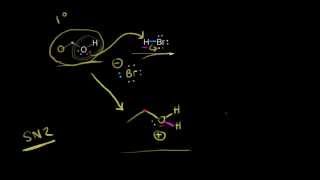 SN1 and SN2 reactions of alcohols ✓ Check-ins10:23
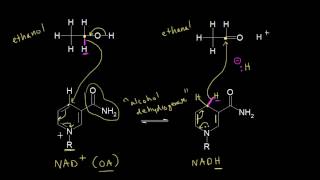 Biological redox reactions of alcohols and phenols ✓ Check-ins9:47
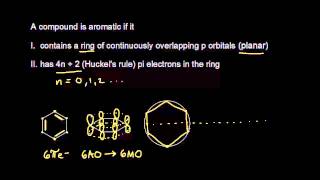 Aromatic stability of benzene ✓ Check-ins6:00
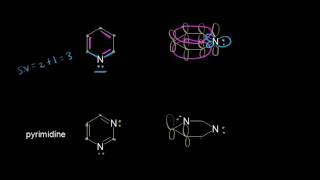 Aromatic heterocycles ✓ Check-ins11:49
Carboxylic acids
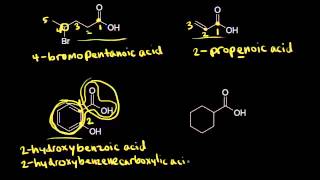 Carboxylic acid nomenclature and properties ✓ Check-ins8:52
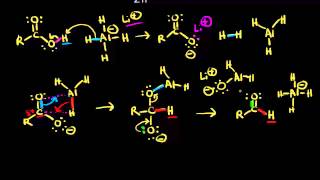 Reduction of carboxylic acids ✓ Check-ins8:54
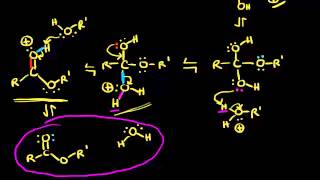 Preparation of esters via Fischer esterification ✓ Check-ins9:37
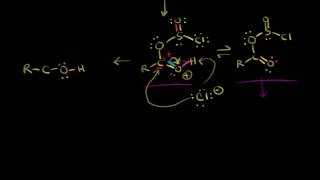 Preparation of acyl (acid) chlorides ✓ Check-ins10:23
 Preparation of acid anhydrides ✓ Check-ins7:09
 Preparation of amides using DCC11:54
 Decarboxylation ✓ Check-ins6:47
 Alpha-substitution of carboxylic acids ✓ Check-ins9:06
Carboxylic acid derivatives
 Nomenclature and properties of acyl (acid) halides and acid anhydrides ✓ Check-ins10:20
 Nomenclature and properties of esters ✓ Check-ins10:31
 Nomenclature and properties of amides ✓ Check-ins8:50
 Reactivity of carboxylic acid derivatives ✓ Check-ins9:03
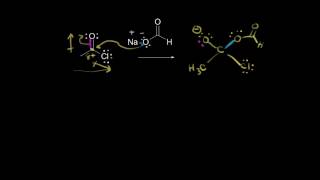 Nucleophilic acyl substitution ✓ Check-ins9:29
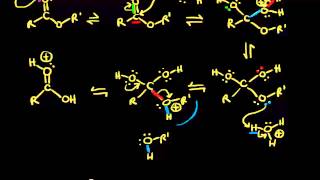 Acid-catalyzed ester hydrolysis ✓ Check-ins11:26
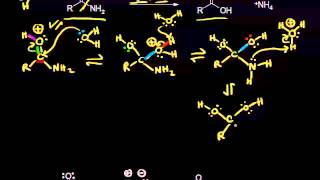 Acid and base-catalyzed hydrolysis of amides ✓ Check-ins11:47
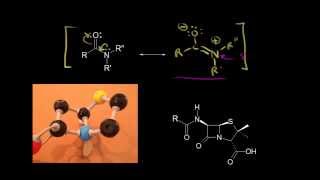 Beta-lactam antibiotics ✓ Check-ins9:14
Enzymes
Reaction rates
 Introduction to reaction rates ✓ Check-ins9:14
 Rate law and reaction order ✓ Check-ins10:39
 Worked example: Determining a rate law using initial rates data ✓ Check-ins12:28
 First-order reaction (with calculus) ✓ Check-ins7:14
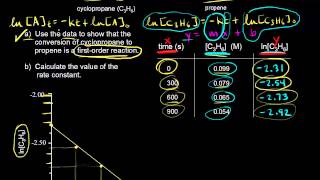 Plotting data for a first-order reaction ✓ Check-ins9:21
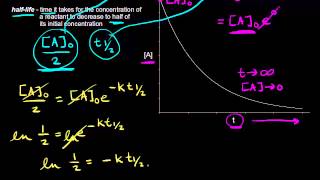 Half-life of a first-order reaction ✓ Check-ins8:16
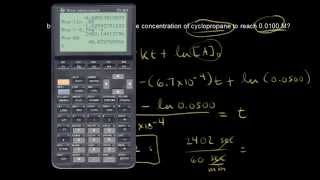 Worked example: Using the first-order integrated rate law and half-life equations ✓ Check-ins10:20
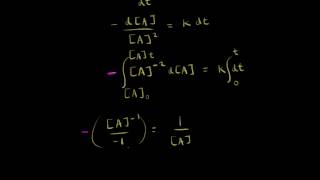 Second-order reaction (with calculus) ✓ Check-ins7:14
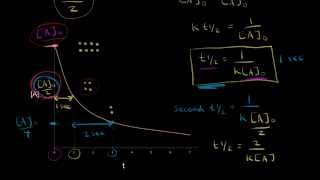 Half-life of a second-order reaction ✓ Check-ins7:09
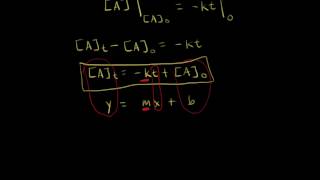 Zero-order reaction (with calculus) ✓ Check-ins9:53
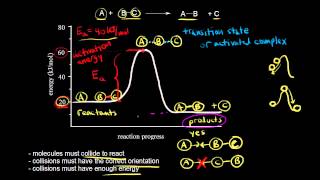 Collision theory ✓ Check-ins8:48
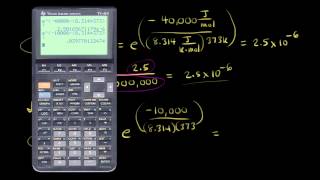 The Arrhenius equation ✓ Check-ins9:24
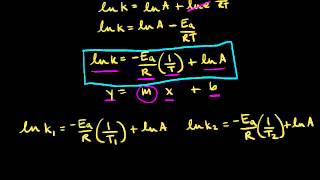 Forms of the Arrhenius equation ✓ Check-ins6:41
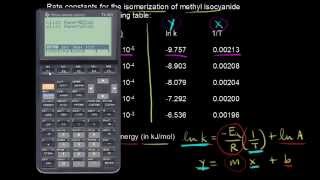 Using the Arrhenius equation ✓ Check-ins11:06
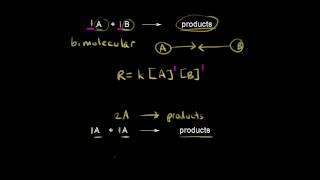 Elementary reactions ✓ Check-ins5:35
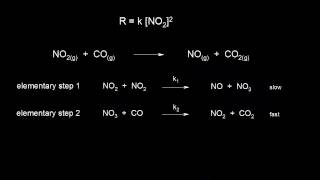 Reaction mechanism and rate law ✓ Check-ins8:42
 Catalysts ✓ Check-ins7:30
- Kinetic and thermodynamic enolates ✓ Check-ins8:19
Equilibrium
 Dynamic equilibrium ✓ Check-ins8:11
 Writing equilibrium constant and reaction quotient expressions ✓ Check-ins7:03
 Le Chȃtelier’s principle: Changing concentration ✓ Check-ins8:38
 Le Chȃtelier’s principle: Changing volume ✓ Check-ins11:09
 Le Chȃtelier’s principle: Changing temperature ✓ Check-ins11:16
 Changes in free energy and the reaction quotient ✓ Check-ins15:47
 Standard change in free energy and the equilibrium constant ✓ Check-ins10:46
 Galvanic cells and changes in free energy ✓ Check-ins12:38
Bioenergetics
Thermodynamics
 Specific heat and latent heat of fusion and vaporization ✓ Check-ins14:57
 Zeroth law of thermodynamics ✓ Check-ins6:12
 First law of thermodynamics equation ✓ Check-ins11:23
 First law of thermodynamics problem solving ✓ Check-ins7:34
 PV diagrams - part 1: Work and isobaric processes ✓ Check-ins11:54
 PV diagrams - part 2: Isothermal, isometric, adiabatic processes ✓ Check-ins13:00
 Second law of thermodynamics13:41
Thermochemistry
 Phase diagrams ✓ Check-ins12:36
 Heat transfer ✓ Check-ins4:15
 Enthalpy ✓ Check-ins8:34
 Enthalpy ✓ Check-ins15:07
 Heat of formation ✓ Check-ins12:35
 Hess's law and reaction enthalpy change ✓ Check-ins15:40
 Gibbs free energy and spontaneity ✓ Check-ins17:40
 Gibbs free energy example ✓ Check-ins9:57
 More rigorous Gibbs free energy / spontaneity relationship ✓ Check-ins13:56
 A look at a seductive but wrong Gibbs spontaneity proof ✓ Check-ins6:41
Unit 11: Foundation 6: Processing the environment
Sensory perception
 Visual cues8:02
 Sensory adaptation ✓ Check-ins6:41
 Weber's law and thresholds ✓ Check-ins9:01
 Absolute threshold of sensation4:43
 Somatosensation ✓ Check-ins7:44
 The vestibular system, balance, and dizziness ✓ Check-ins6:45
 Signal detection theory - part 1 ✓ Check-ins6:32
 Signal detection theory - part 2 ✓ Check-ins5:03
 Bottom-up vs. top-down processing ✓ Check-ins4:27
 Gestalt principles ✓ Check-ins8:08
 Overview of Sensation and Meissner's Corpuscle8:03
 Pacinian's Corpuscle and Merkel's Disk ✓ Check-ins7:18
 Ruffini's Ending and Hair Follicle Receptor ✓ Check-ins7:32
Sight (vision)
 The structure of the eye ✓ Check-ins10:28
 Visual sensory information ✓ Check-ins8:02
 The phototransduction cascade ✓ Check-ins9:56
 Photoreceptors (rods vs cones) ✓ Check-ins5:06
 Photoreceptor distribution in the fovea ✓ Check-ins5:43
 Visual field processing ✓ Check-ins4:10
 Feature detection and parallel processing ✓ Check-ins7:09
Sound (Audition)
Somatosensation
Taste (gustation) and smell (olfaction)

Sleep and consciousness



Drug dependence
 Overview of psychoactive drugs ✓ Check-ins7:08
 Psychoactive drugs: Depressants and opiates4:27
 Psychoactive drugs: Stimulants ✓ Check-ins3:19
 Psychoactive drugs: Hallucinogens ✓ Check-ins3:46
 Drug dependence and homeostasis ✓ Check-ins3:18
 Routes of drug entry ✓ Check-ins3:51
 Reward pathway in the brain ✓ Check-ins8:26
 Tolerance and withdrawal ✓ Check-ins5:33
 Substance use disorders ✓ Check-ins7:31
 Treatments and triggers for drug dependence ✓ Check-ins7:43
Attention
Memory
 Information processing model: Sensory, working, and long term memory ✓ Check-ins7:34
 Encoding strategies ✓ Check-ins8:39
 Retrieval cues ✓ Check-ins4:38
 Retrieval: Free recall, cued recall, and recognition ✓ Check-ins4:25
 Memory reconstruction, source monitoring, and emotional memories ✓ Check-ins4:47
 Long term potentiation and synaptic plasticity ✓ Check-ins2:37
 Decay and interference ✓ Check-ins4:33
 Aging and cognitive abilities ✓ Check-ins3:09
 Alzheimer's disease and Korsakoff's syndrome ✓ Check-ins3:50
 Semantic networks and spreading activation ✓ Check-ins3:39
Cognition
 Piaget's stages of cognitive development ✓ Check-ins5:52
 Schemas, assimilation, and accommodation ✓ Check-ins5:24
 Problem solving ✓ Check-ins5:51
 Decision making ✓ Check-ins6:34
- Semantic networks and spreading activation ✓ Check-ins3:39
 Intelligence ✓ Check-ins7:58
 Theories of intelligence ✓ Check-ins7:11
 Aging and cognitive abilities ✓ Check-ins3:10
 Cognitive dissonance ✓ Check-ins4:48
- Information processing model: Sensory, working, and long term memory ✓ Check-ins7:34
Language


Emotion


Unit 12: Foundation 7: Behavior
Biological basis of behavior: Nervous system
- Structure of the nervous system ✓ Check-ins8:48
- Functions of the nervous system ✓ Check-ins6:38
- Motor unit ✓ Check-ins9:36
 Peripheral somatosensation ✓ Check-ins9:28
- Muscle stretch reflex ✓ Check-ins9:34
- Autonomic nervous system ✓ Check-ins11:24
 Gray and white matter ✓ Check-ins6:18
- Upper motor neurons ✓ Check-ins13:41
- Somatosensory tracts ✓ Check-ins7:07
 Overview of the functions of the cerebral cortex ✓ Check-ins5:44
 Hemispheric differences and hemispheric dominance ✓ Check-ins4:37
 The old brain ✓ Check-ins7:11
 Cerebellum ✓ Check-ins7:07
 Brainstem ✓ Check-ins8:02
 Subcortical cerebrum ✓ Check-ins8:42
 Cerebral cortex ✓ Check-ins8:22
 Neurotransmitter anatomy ✓ Check-ins8:23
 Early methods of studying the brain ✓ Check-ins6:27
 Lesion studies and experimental ablation ✓ Check-ins6:41
 Modern ways of studying the brain ✓ Check-ins5:18
 Endocrine system and influence on behavior - Part 1 ✓ Check-ins10:31
 Endocrine system and influence on behavior - Part 2 ✓ Check-ins7:01
Human development
- Egg, sperm, and fertilization ✓ Check-ins11:35
- Early embryogenesis - Cleavage, blastulation, gastrulation, and neurulation ✓ Check-ins12:20
- Implantation ✓ Check-ins4:50
- Germ layer derivatives ✓ Check-ins2:11
- Gestation ✓ Check-ins4:25
 Major motor milestones ✓ Check-ins3:30
 Motor development ✓ Check-ins4:31
 Neonatal reflexes ✓ Check-ins5:13
 Physical development in adolescence ✓ Check-ins4:33
 Brain changes during adolescence ✓ Check-ins6:30
Behavior and genetics



Motivation and attitudes
 Physiological concept of positive and negative feedback ✓ Check-ins6:33
 Instincts, Arousal, Needs, Drives: Drive-Reduction and Cognitive Theories3:57
 Maslow's hierarchy of needs ✓ Check-ins3:53
 Incentive theory ✓ Check-ins3:37
 Biological and Sociocultural Factors Food, Sex, and Drugs ✓ Check-ins9:13
 Components of attitudes ✓ Check-ins4:59
 Attitude influences behavior ✓ Check-ins10:04
 Behavior influences attitude ✓ Check-ins5:57
- Cognitive dissonance ✓ Check-ins4:48
 Situational approach ✓ Check-ins6:35
Theories of personality
- Situational approach ✓ Check-ins6:35
 Psychoanalytic theory ✓ Check-ins7:43
 Maslow's hierarchy of needs ✓ Check-ins3:17
 Humanistic theory ✓ Check-ins6:06
 Biological theory ✓ Check-ins5:33
 Behavioral theory ✓ Check-ins4:18
 Trait theory ✓ Check-ins10:01
 Observational learning: Bobo doll experiment and social cognitive theory ✓ Check-ins9:46
 Defense mechanisms ✓ Check-ins8:36
 Freud - Death drive, reality principle, and pleasure principle ✓ Check-ins5:10
Psychological disorders
 Introduction to mental disorders ✓ Check-ins4:56
 Categories of mental disorders ✓ Check-ins16:19
 Schizophrenia ✓ Check-ins6:08
 Biological basis of schizophrenia ✓ Check-ins13:38
 Biological basis of depression ✓ Check-ins9:02
 Anxiety disorders and obsessive compulsive disorder11:24
 Somatic symptom disorder and other disorders5:54
 Personality disorders ✓ Check-ins8:21
 Sleep disorders ✓ Check-ins5:26
 Sleep wake disorders breathing related sleep disorders ✓ Check-ins9:01
- Reward pathway in the brain ✓ Check-ins8:26
- Drug dependence and homeostasis ✓ Check-ins3:18
- Tolerance and withdrawal ✓ Check-ins5:33
 Substance use disorders ✓ Check-ins7:31
 Biological basis of parkinson's disease ✓ Check-ins7:46
 Depression and major depressive disorder ✓ Check-ins11:19
 Depression and bipolar disorder ✓ Check-ins4:34
Social psychology
 Conformity and groupthink ✓ Check-ins7:35
 Conformity and obedience ✓ Check-ins5:58
 Asch conformity studies (Asch line studies) ✓ Check-ins9:56
 Events that inspired the Milgram studies on obedience ✓ Check-ins4:00
 Milgram experiment on obedience ✓ Check-ins7:06
 What can we learn from the Milgram experiment ✓ Check-ins4:21
 Zimbardo prison study The Stanford prison experiment ✓ Check-ins7:02
 A closer look at the Stanford prison experiment ✓ Check-ins6:55
 Factors that influence obedience and conformity ✓ Check-ins7:45
 Bystander effect ✓ Check-ins7:01
 Social facilitation and social loafing ✓ Check-ins4:38
 Agents of socialization ✓ Check-ins4:44
Normative and non-normative behavior

Learning
 Classical conditioning: Neutral, conditioned, and unconditioned stimuli and responses5:47
 Classical conditioning: Extinction, spontaneous recovery, generalization, discrimination ✓ Check-ins5:34
 Operant conditioning: Positive-and-negative reinforcement and punishment7:00
 Operant conditioning: Shaping ✓ Check-ins7:20
 Operant conditioning: Schedules of reinforcement7:49
 Operant conditioning: Innate vs learned behaviors ✓ Check-ins9:25
 Operant conditioning: Escape and avoidance learning ✓ Check-ins2:20
 Observational learning: Bobo doll experiment and social cognitive theory ✓ Check-ins9:46
- Long term potentiation and synaptic plasticity ✓ Check-ins2:37
 Non associative learning ✓ Check-ins3:59
 Biological constraints on learning ✓ Check-ins10:36
Theories of attitude and behavior change
- Components of attitudes ✓ Check-ins4:59
- Attitude influences behavior ✓ Check-ins10:04
- Behavior influences attitude ✓ Check-ins5:57
 Persuasion, attitude change, and the elaboration likelihood model ✓ Check-ins5:43
 Reciprocal determinism ✓ Check-ins2:58
 Locus of control, learned helplessness, and the tyranny of choice6:38
 Self control ✓ Check-ins8:23
Unit 13: Foundation 8: Individuals and society
Self-identity
 Self concept, self identity, and social identity ✓ Check-ins9:38
 Self esteem, self efficacy, and locus of control ✓ Check-ins7:59
 Overview of theories of development ✓ Check-ins7:45
 Freud's psychosexual development ✓ Check-ins12:20
 Erikson's psychosocial development ✓ Check-ins14:43
 Vygotsky sociocultural development ✓ Check-ins9:56
 Kohlberg moral development ✓ Check-ins9:53
 Social influences ✓ Check-ins11:28
 George Herbert Mead- The I and the Me5:28
 Charles Cooley- Looking glass self ✓ Check-ins3:14
Perception, prejudice, and bias
 Attribution Theory - Basic covariation ✓ Check-ins4:38
 Attribution theory - Attribution error and culture ✓ Check-ins5:28
 Stereotypes stereotype threat and self fulfilling prophecies ✓ Check-ins6:14
 Emotion and cognition in prejudice ✓ Check-ins7:13
 Prejudice and discrimination based on race, ethnicity, power, social class, and prestige ✓ Check-ins3:13
 Stigma - Social and self ✓ Check-ins7:16
 Social perception - Primacy recency ✓ Check-ins4:51
 Social perception - The Halo Effect ✓ Check-ins5:15
 Social perception - The Just World Hypothesis ✓ Check-ins6:33
 Ethnocentrism and cultural relativism in group and out group ✓ Check-ins8:43
Attributing behavior to persons or situations
Social behavior


Social interactions
 Status ✓ Check-ins2:47
 Role strain and role conflict ✓ Check-ins2:18
 Primary and secondary groups ✓ Check-ins3:40
- Ethnocentrism and cultural relativism in group and out group ✓ Check-ins8:43
 Dramaturgical approach ✓ Check-ins3:32
 Impression management ✓ Check-ins4:08
 Aggression ✓ Check-ins7:56
 Harlow monkey experiments ✓ Check-ins3:23
 Altruism ✓ Check-ins3:56
 Discrimination individual vs institutional ✓ Check-ins4:17
 Prejudice vs discrimination ✓ Check-ins2:28
- Prejudice and discrimination based on race, ethnicity, power, social class, and prestige ✓ Check-ins3:13
 Organizations and bureaucratization ✓ Check-ins4:59
 Characteristics of an ideal bureaucracy ✓ Check-ins4:37
 Social support ✓ Check-ins3:37
Self-presentation and interacting with others
Biological explanations of social behavior in animals

Unit 14: Foundation 9: Society and culture
Social structures
 Macrosociology vs microsociology ✓ Check-ins3:38
 Social institutions ✓ Check-ins3:27
 Social institutions - education, family, and religion ✓ Check-ins6:31
 Social institutions - government, economy, health and medicine ✓ Check-ins4:52
 Functionalism ✓ Check-ins5:42
 Conflict theory ✓ Check-ins4:38
 Social constructionism ✓ Check-ins2:46
 Symbolic interactionism ✓ Check-ins3:35
 Rational choice-exchange theory ✓ Check-ins8:00
 Social theories overview (part 1) ✓ Check-ins4:11
 Social theories overview (part 2) ✓ Check-ins4:09
 Relating social theories to medicine ✓ Check-ins9:30
Demographics
 Demographic structure of society - age5:16
 Demographic structure of society - race and ethnicity ✓ Check-ins5:47
 Demographic structure of society - immigration ✓ Check-ins3:05
 Demographic structure of society - sex, gender, and sexual orientation ✓ Check-ins7:41
 Demographic structure of society overview ✓ Check-ins7:02
 Urbanization ✓ Check-ins8:09
 Population dynamics ✓ Check-ins9:01
 Demographic transition ✓ Check-ins7:46
 Globalization theories ✓ Check-ins5:47
 Globalization- trade and transnational corporations ✓ Check-ins6:32
 Social movements ✓ Check-ins7:35
 Overview of demographics ✓ Check-ins10:38
Culture







Unit 15: Foundation 10: Social inequality
Social inequality
 Overview of social inequality ✓ Check-ins3:57
 Upward and downward mobility, meritocracy ✓ Check-ins6:36
 Intergenerational and intragenerational mobility social mobility ✓ Check-ins3:32
 Absolute and relative poverty ✓ Check-ins7:30
 Social reproduction ✓ Check-ins5:12
 Social exclusion (segregation and social isolation) ✓ Check-ins6:20
 Environmental justice ✓ Check-ins4:33
 Residential segregation ✓ Check-ins6:28
 Global inequality ✓ Check-ins6:00
- Prejudice and discrimination based on race, ethnicity, power, social class, and prestige ✓ Check-ins3:13
 Health and healthcare disparities in the US ✓ Check-ins4:01
 Intersectionality ✓ Check-ins3:30
 Class consciousness and false consciousness ✓ Check-ins4:18
Learn this with a class
With a class on Puzzicle this course runs as a timetable of live study parties: your batch watches together and answers the check-ins, sometimes with a teacher leading.
Course content © Khan Academy, used under CC BY-NC-SA. See this course on Khan Academy.